
Freedom Fighters · Revolutionaries
Shaheed Udham Singh
1899 – 1940
He carried the memory of Jallianwala Bagh for twenty-one years.
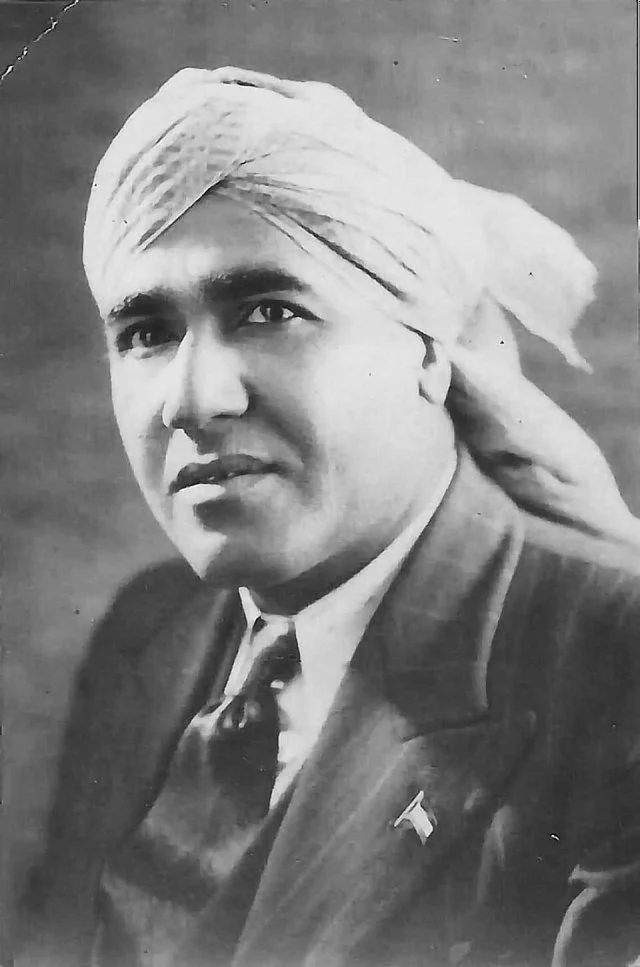
Udham Singh was a revolutionary associated with the Ghadar movement and the Hindustan Socialist Republican Association. On 13 March 1940, in Caxton Hall, London, he shot Sir Michael O’Dwyer, who had been Lieutenant Governor of Punjab at the time of the 1919 Jallianwala Bagh massacre. He was hanged in London on 31 July 1940.
Early life and background
Born in Sunam, Punjab, Udham Singh was orphaned young and raised in the Central Khalsa Orphanage in Amritsar.
Historical context
On 13 April 1919, troops under Brigadier-General Reginald Dyer fired on an unarmed crowd at Jallianwala Bagh, Amritsar, killing hundreds of people. Sir Michael O’Dwyer, the Lieutenant Governor of Punjab, endorsed Dyer’s action.
Key achievements
Udham Singh travelled widely, associated with the Ghadar movement abroad and was imprisoned in India for possessing arms. In 1934 he reached London. On 13 March 1940 he shot O’Dwyer at a meeting at Caxton Hall.
Important events and milestones
- 13 April 1919 Jallianwala Bagh massacre in Amritsar.
- 1927–1931 Imprisoned in India for possession of arms.
- 1934 Arrives in London.
- 13 March 1940 Shoots Michael O’Dwyer at Caxton Hall.
- 31 July 1940 Hanged at Pentonville Prison, London.
- 1974 His remains are returned to India.
Awards and honours
His remains were brought back to India in 1974 and cremated in Sunam. Udham Singh Nagar district in Uttarakhand is named after him.
His sacrifice
At his trial he gave his name as Ram Mohammad Singh Azad, a name that brought together India’s major faiths. He was hanged at Pentonville Prison on 31 July 1940.
Enduring legacy
Udham Singh is remembered for his resolve and for the name he chose, which expressed a vision of a united India. Whether he was present at Jallianwala Bagh in 1919 is debated by historians.
References
Portrait: Photograph (Punjab State Archives) · Punjab state archives · Public domain · Source (opens in a new tab)
This account is compiled from the sources listed and is offered as a tribute, not as an official record. Corrections are welcome at connect@vedacloud.ai.