Veer Gatha · वीर गाथा

Veer Gatha — remembering the immortal heroes of Bharat

Every generation inherits the sacrifices of those who came before it. This is our humble tribute to the men and women whose courage, convictions and service helped shape Bharat’s history and defend its sovereignty.

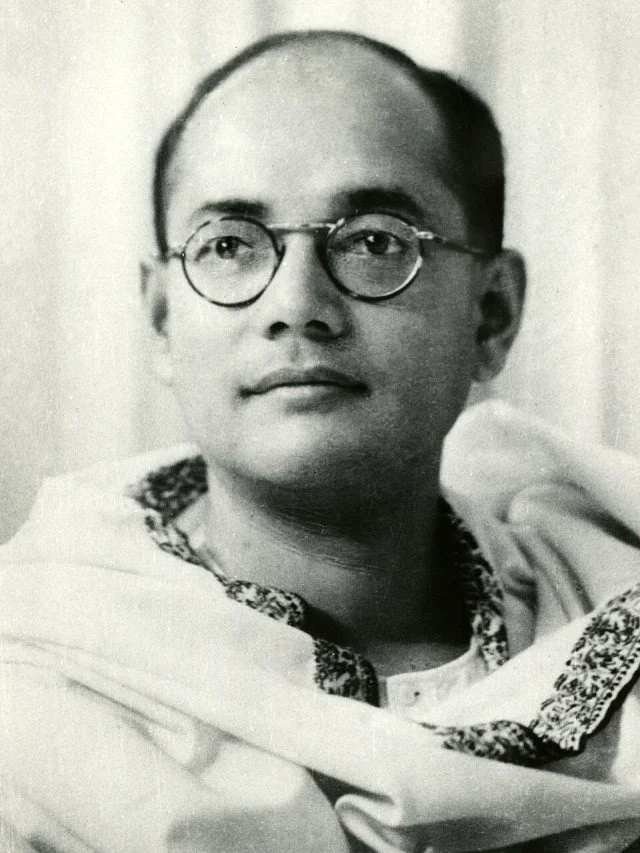
  1. Portrait of Netaji Subhas Chandra Bose (Photograph)
    Photograph

    Freedom Fighters

    Netaji Subhas Chandra Bose

    1897 – 1945 (see note)

    The leader who took the struggle for freedom beyond India’s borders and raised the Azad Hind Fauj.

    Twice elected President of the Indian National Congress, Subhas Chandra Bose broke with its leadership over the pace of the struggle, escaped British surveillance in 1941 and went on to lead the Indian National Army and the Provisional Government of Free India in South-East Asia.

    Movement and contribution
    Indian National Army · Provisional Government of Free India (1943)Led the Azad Hind Fauj in the 1944 campaign on India’s north-eastern frontier.
    Legacy
    The INA trials of 1945–46 stirred the country, and his call for complete independence continues to inspire. His birth anniversary, 23 January, is observed as Parakram Diwas.
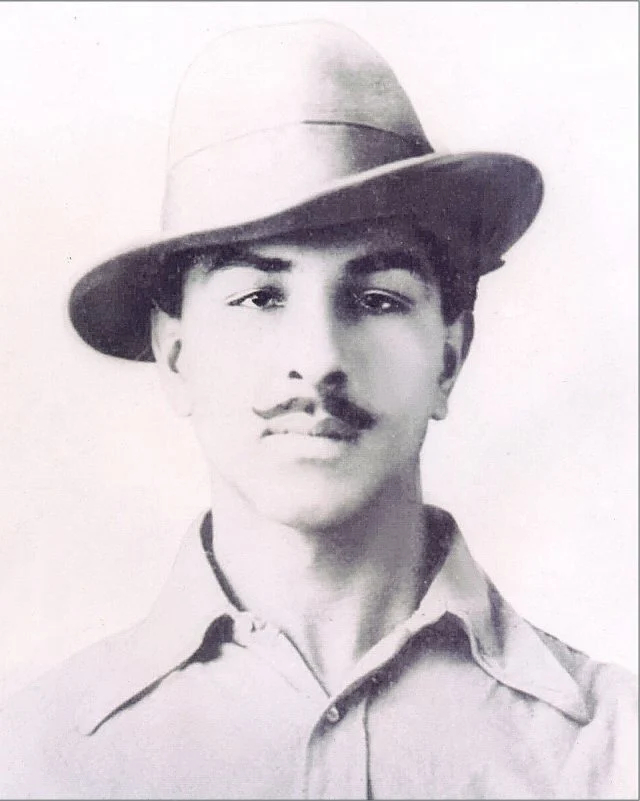
  2. Portrait of Shaheed Bhagat Singh (Photograph, 1929)
    Photograph, 1929

    Freedom Fighters · Revolutionaries

    Shaheed Bhagat Singh

    1907 – 1931

    A revolutionary thinker who gave his life at twenty-three and whose ideas outlived the gallows.

    A leading member of the Hindustan Socialist Republican Association, Bhagat Singh took part in the 1928 Lahore shooting of police officer John Saunders and, with Batukeshwar Dutt, threw non-lethal bombs into the Central Legislative Assembly in 1929 and courted arrest. He was hanged in Lahore on 23 March 1931 with Rajguru and Sukhdev.

    Movement and contribution
    Hindustan Socialist Republican AssociationCentral Legislative Assembly protest, 8 April 1929; Lahore Conspiracy Case.
    Legacy
    His writings from prison and his courage before execution made him one of the most enduring symbols of the freedom struggle. 23 March is remembered as Shaheed Diwas.
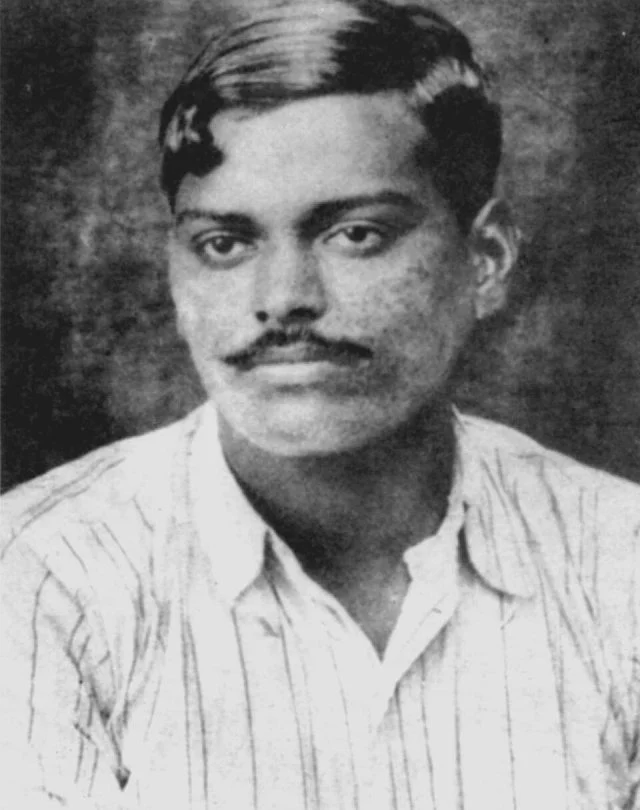
  3. Portrait of Chandrashekhar Azad (Photograph)
    Photograph

    Freedom Fighters · Revolutionaries

    Chandrashekhar Azad

    1906 – 1931

    The revolutionary who called himself ‘Azad’ — free — and kept that promise to the end.

    Chandrashekhar Azad was a leading organiser of the Hindustan Republican Association and its successor, the Hindustan Socialist Republican Association. He took part in the Kakori train action of 1925 and the 1928 Lahore action, and evaded capture for years until he was surrounded by police in Allahabad in February 1931.

    Movement and contribution
    Hindustan Socialist Republican AssociationKakori train action (1925); commander-in-chief of the HSRA.
    Legacy
    The park in Prayagraj where he fell now bears his name — Chandrashekhar Azad Park.
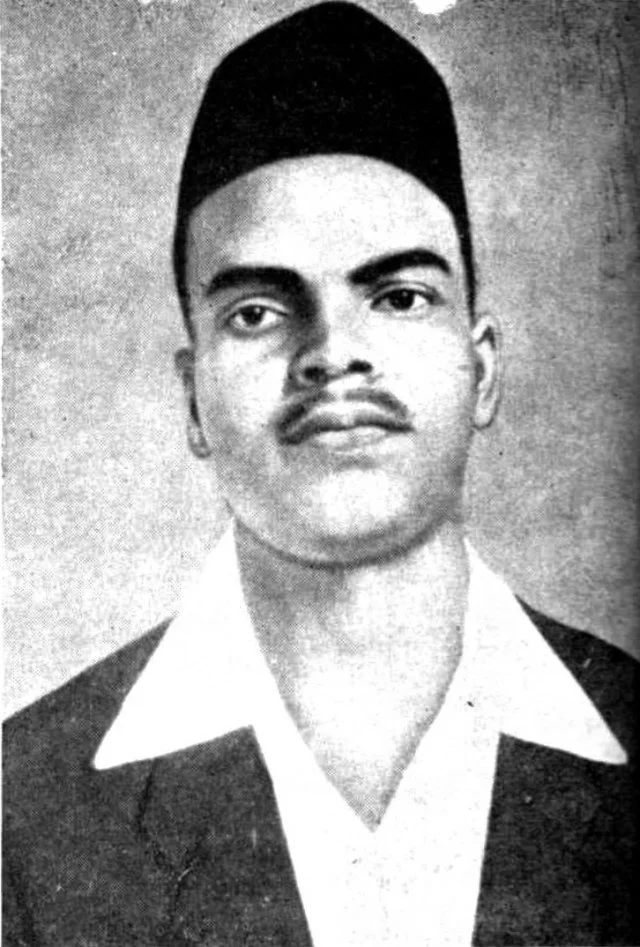
  4. Portrait of Shaheed Sukhdev Thapar (Photograph)
    Photograph

    Freedom Fighters · Revolutionaries

    Shaheed Sukhdev Thapar

    1907 – 1931

    The organiser behind the revolutionary movement in Punjab, who went to the gallows beside Bhagat Singh and Rajguru.

    Sukhdev Thapar was a key organiser of the Hindustan Socialist Republican Association in Punjab and of the Naujawan Bharat Sabha. Convicted in the Lahore Conspiracy Case, he was executed with Bhagat Singh and Shivaram Rajguru on 23 March 1931.

    Movement and contribution
    Hindustan Socialist Republican Association · Naujawan Bharat SabhaLahore Conspiracy Case, 1929–31.
    Legacy
    He is remembered every year on Shaheed Diwas, 23 March, alongside Bhagat Singh and Rajguru.
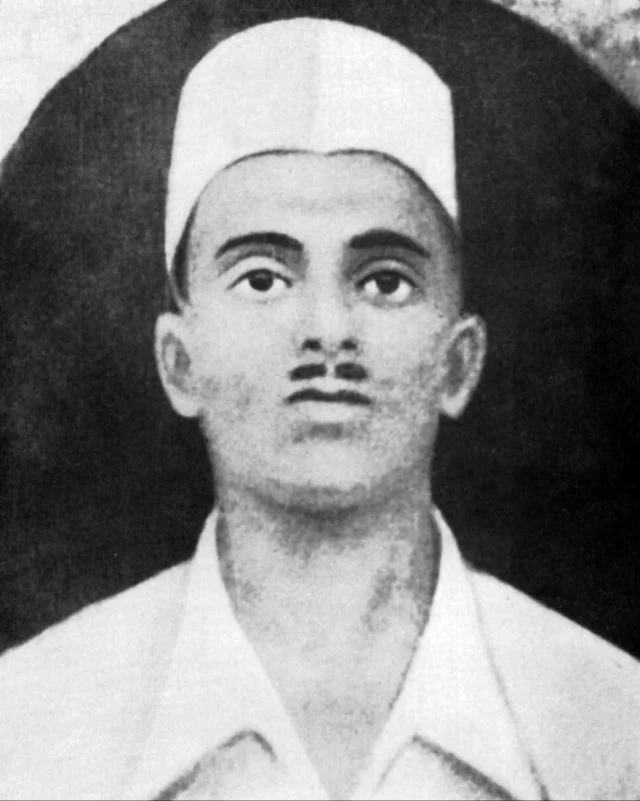
  5. Portrait of Shaheed Shivaram Hari Rajguru (Photograph)
    Photograph

    Freedom Fighters · Revolutionaries

    Shaheed Shivaram Hari Rajguru

    1908 – 1931

    A young revolutionary from Maharashtra who stood with his comrades to the very end.

    Shivaram Rajguru was a member of the Hindustan Socialist Republican Association who took part in the 1928 Lahore action in which police officer John Saunders was killed. He was executed with Bhagat Singh and Sukhdev on 23 March 1931.

    Movement and contribution
    Hindustan Socialist Republican AssociationLahore action, December 1928; Lahore Conspiracy Case.
    Legacy
    His birthplace, Khed, was renamed Rajgurunagar in his honour.
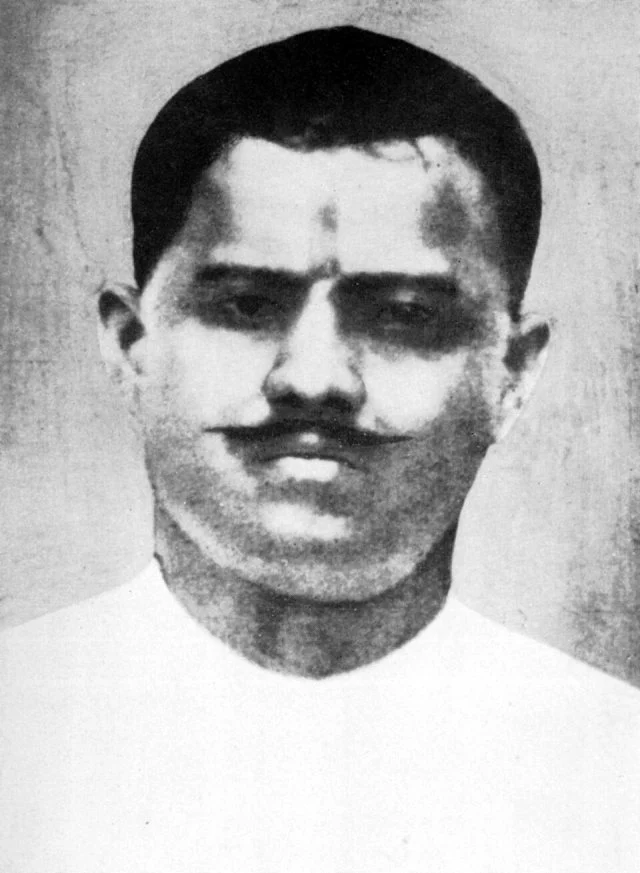
  6. Portrait of Shaheed Ram Prasad Bismil (Photograph (from a roll of honour))
    Photograph (from a roll of honour)

    Freedom Fighters · Revolutionaries

    Shaheed Ram Prasad Bismil

    1897 – 1927

    Poet and revolutionary — a founder of the Hindustan Republican Association and leader of the Kakori action.

    Ram Prasad Bismil was a founding member of the Hindustan Republican Association and a leader of the Kakori train action of 9 August 1925. Convicted in the Kakori Conspiracy Case, he was executed in Gorakhpur jail on 19 December 1927. He wrote poetry in Hindi and Urdu under the pen name ‘Bismil’.

    Movement and contribution
    Hindustan Republican AssociationKakori train action, 9 August 1925.
    Legacy
    His friendship with Ashfaqulla Khan, who was executed the same day, remains a celebrated symbol of unity in the freedom struggle.
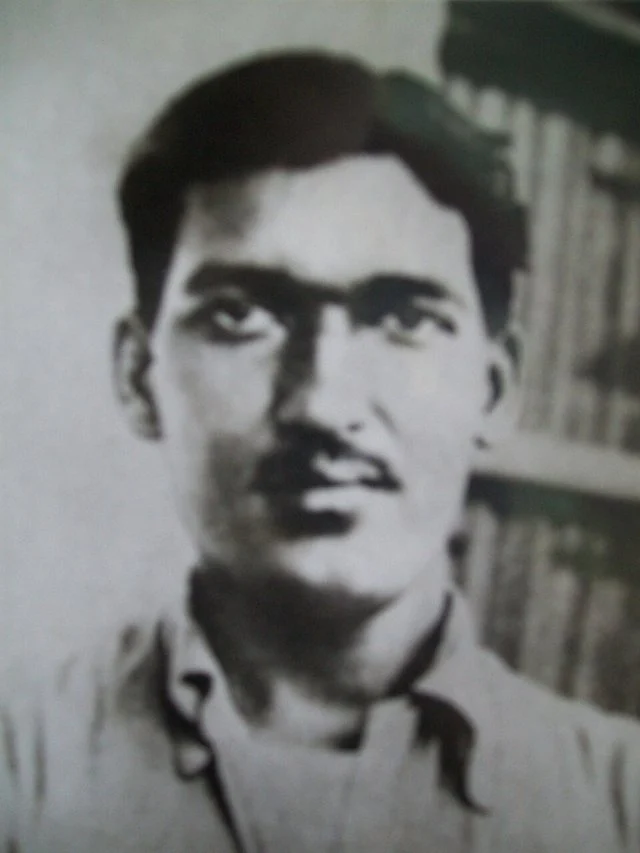
  7. Portrait of Shaheed Ashfaqulla Khan (Photograph, c. 1920s)
    Photograph, c. 1920s

    Freedom Fighters · Revolutionaries

    Shaheed Ashfaqulla Khan

    1900 – 1927

    Poet, revolutionary and Bismil’s closest comrade, who chose the gallows over betraying the cause.

    Ashfaqulla Khan was a member of the Hindustan Republican Association and took part in the Kakori train action of 1925. He evaded arrest for about a year before being captured in Delhi, and was executed in Faizabad jail on 19 December 1927.

    Movement and contribution
    Hindustan Republican AssociationKakori train action, 9 August 1925.
    Legacy
    His friendship with Ram Prasad Bismil is remembered as an enduring example of Hindu–Muslim unity in the freedom struggle.
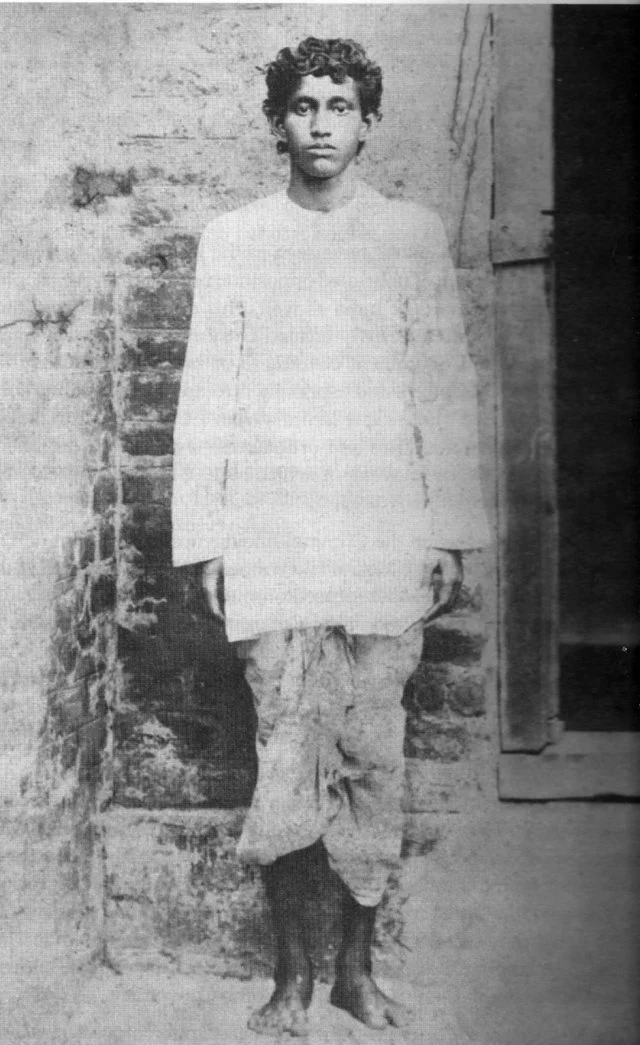
  8. Portrait of Shaheed Khudiram Bose (Photograph, c. 1905)
    Photograph, c. 1905

    Freedom Fighters · Revolutionaries

    Shaheed Khudiram Bose

    1889 – 1908

    One of the youngest revolutionaries executed by the colonial government — he was eighteen.

    Khudiram Bose was a young revolutionary from Bengal who, with Prafulla Chaki, attacked a carriage in Muzaffarpur in April 1908 believing it carried the magistrate Douglas Kingsford. The bomb killed two British women instead. He was arrested, tried and hanged on 11 August 1908.

    Movement and contribution
    Revolutionary movement in Bengal (Jugantar circle)Muzaffarpur, 30 April 1908.
    Legacy
    His youth and composure at his execution made him a folk hero in Bengal, remembered in songs that are still sung today.
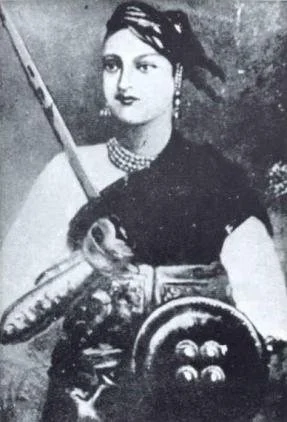
  9. Portrait of Rani Lakshmibai of Jhansi (Painted portrait (posthumous, 19th century))
    Painted portrait (posthumous, 19th century)

    Freedom Fighters

    Rani Lakshmibai of Jhansi

    c. 1828 – 1858

    The queen of Jhansi who fought at the head of her forces in 1857 and fell in battle.

    Rani Lakshmibai became a leading figure of the 1857 uprising after the East India Company annexed Jhansi under the Doctrine of Lapse. She defended Jhansi during its siege in 1858, fought on with Tatya Tope and others, and was killed in battle near Gwalior in June 1858.

    Movement and contribution
    The Uprising of 1857Defence of Jhansi (1858); battles at Kalpi and Gwalior.
    Legacy
    One of the most celebrated figures in Indian history, she is remembered as a symbol of courage and resistance — the INA’s women’s regiment was named after her.
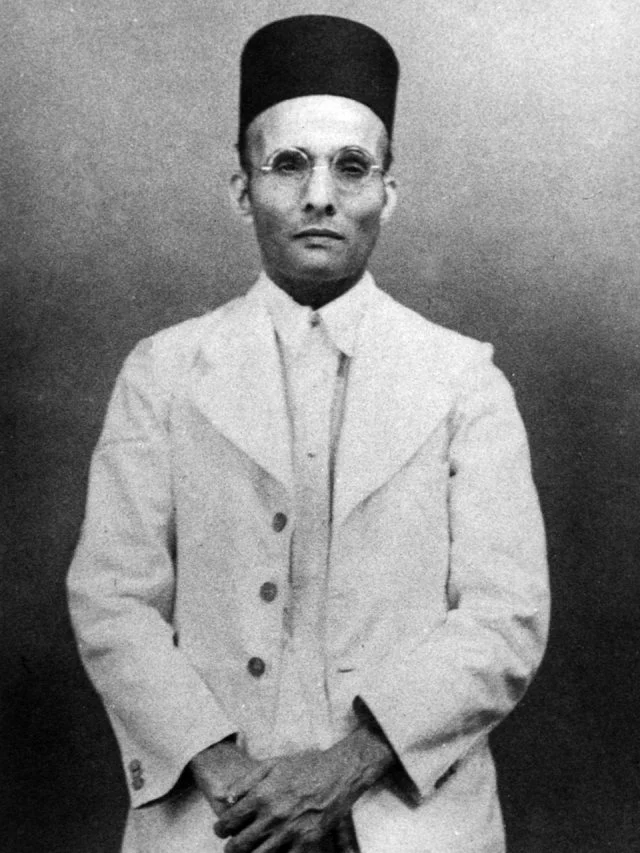
  10. Portrait of Veer Vinayak Damodar Savarkar (Photograph)
    Photograph

    Freedom Fighters · Revolutionaries

    Veer Vinayak Damodar Savarkar

    1883 – 1966

    Revolutionary organiser, writer and long-term political prisoner of the Cellular Jail.

    V. D. Savarkar founded the revolutionary society Abhinav Bharat, was active in the India House circle in London and wrote a history of 1857 as a war of independence that the colonial government banned. Arrested in 1910, he was transported to the Cellular Jail in the Andamans and remained imprisoned or under restriction until 1937.

    Movement and contribution
    Abhinav Bharat · India House, LondonAuthor of ‘The Indian War of Independence of 1857’ (1909).
    Legacy
    A significant and debated figure in modern Indian history, remembered by many for his revolutionary work and long imprisonment.
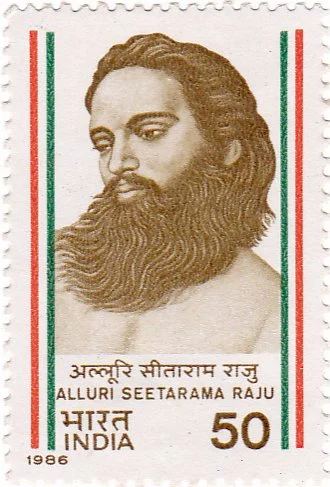
  11. Portrait of Alluri Sitarama Raju (India Post commemorative stamp, 1986)
    India Post commemorative stamp, 1986

    Freedom Fighters · Unsung Heroes

    Alluri Sitarama Raju

    1897 – 1924

    Leader of the Rampa Rebellion, who stood with the forest communities of the Eastern Ghats against colonial rule.

    Alluri Sitarama Raju led the Rampa Rebellion of 1922–24 in the hill tracts of the Godavari and Visakhapatnam regions, mobilising Adivasi communities whose livelihoods were threatened by colonial forest laws. He was captured and killed by colonial forces in May 1924.

    Movement and contribution
    Rampa Rebellion, 1922–24Raids on police stations at Chintapalli, Krishnadevipeta and Rajavommangi, August 1922.
    Legacy
    Revered in Andhra Pradesh as ‘Manyam Veerudu’ — hero of the forests. India Post issued a stamp in his honour in 1986.
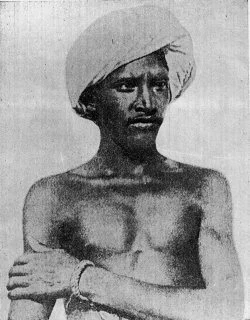
  12. Portrait of Dharti Aaba Birsa Munda (Photograph (published in S. C. Roy, 1912))
    Photograph (published in S. C. Roy, 1912)

    Freedom Fighters · Unsung Heroes

    Dharti Aaba Birsa Munda

    1875 – 1900

    ‘Father of the Earth’ — the young Munda leader of the Ulgulan, the great tumult of 1899–1900.

    Birsa Munda led the Munda uprising known as the Ulgulan in the Chotanagpur region against land alienation, forced labour and the colonial system that enabled them. He was arrested in February 1900 and died in Ranchi jail in June that year, aged twenty-four.

    Movement and contribution
    The Ulgulan (Munda uprising), 1899–1900Chotanagpur plateau, present-day Jharkhand.
    Legacy
    His birth anniversary, 15 November, is observed nationally as Janjatiya Gaurav Divas; it is also the foundation day of Jharkhand.
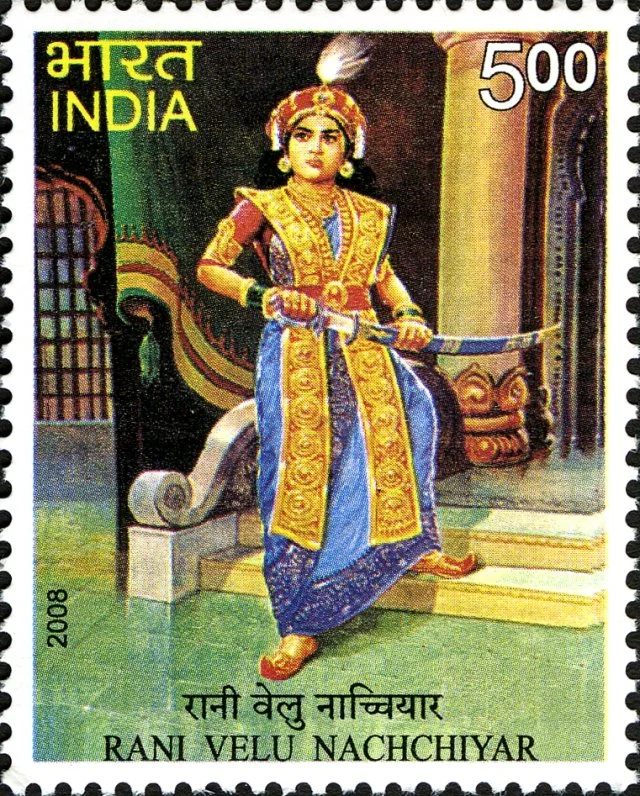
  13. Portrait of Rani Velu Nachiyar (India Post commemorative stamp, 2008)
    India Post commemorative stamp, 2008

    Freedom Fighters · Unsung Heroes

    Rani Velu Nachiyar

    1730 – 1796

    Queen of Sivaganga, who regained her kingdom from the East India Company decades before 1857.

    After her husband was killed in 1772 by forces of the East India Company and the Nawab of Arcot, Velu Nachiyar went into hiding, built alliances including with Hyder Ali of Mysore, and in 1780 recovered Sivaganga, which she then ruled.

    Movement and contribution
    Recovery of Sivaganga, 1780Early armed resistance to East India Company expansion in southern India.
    Legacy
    Remembered in Tamil Nadu as ‘Veeramangai’ — the brave woman; India Post issued a stamp in her honour in 2008.
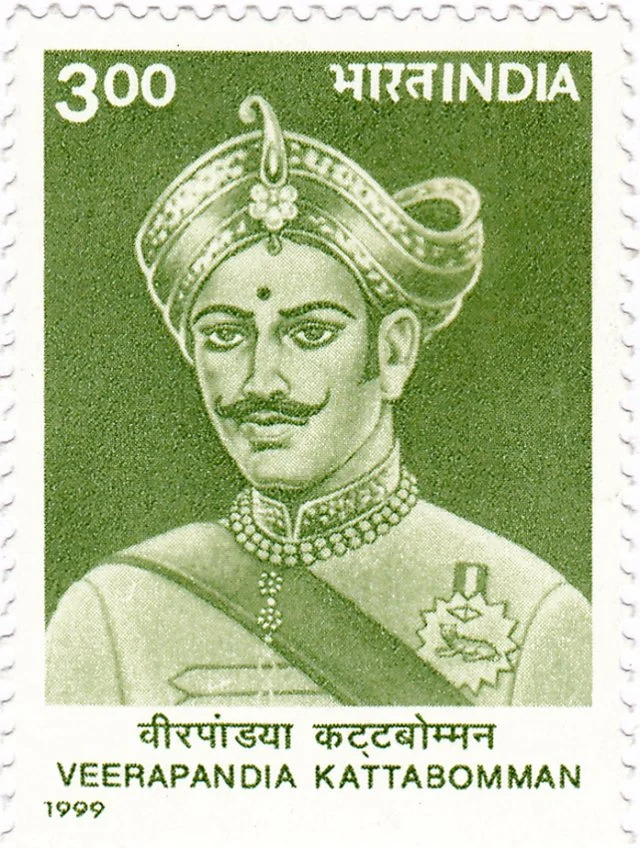
  14. Portrait of Veerapandiya Kattabomman (India Post commemorative stamp, 1999)
    India Post commemorative stamp, 1999

    Freedom Fighters · Unsung Heroes

    Veerapandiya Kattabomman

    1760 – 1799

    The palayakkarar of Panchalankurichi who refused to pay tribute to the East India Company.

    Kattabomman was the chieftain (palayakkarar) of Panchalankurichi who refused to accept the East India Company’s authority to collect tribute. After the Company besieged his fort in 1799 he was captured and hanged at Kayathar on 16 October 1799.

    Movement and contribution
    Resistance of the palayakkarars, 1790sSiege of Panchalankurichi, 1799.
    Legacy
    One of the earliest symbols of resistance to Company rule in southern India; India Post honoured him with a stamp in 1999.
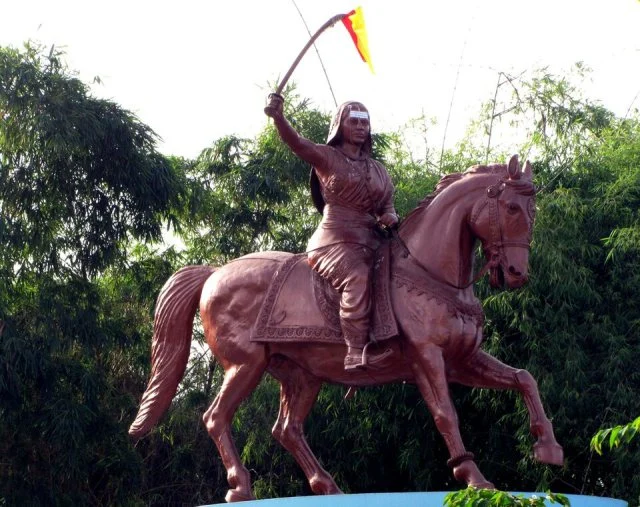
  15. Portrait of Rani Chennamma of Kittur (Statue of Rani Chennamma (photograph))
    Statue of Rani Chennamma (photograph)

    Freedom Fighters · Unsung Heroes

    Rani Chennamma of Kittur

    1778 – 1829

    The queen of Kittur whose forces defeated the East India Company in 1824.

    When the East India Company refused to recognise her adopted son as heir to Kittur, Rani Chennamma resisted. Her forces defeated a Company force in October 1824, killing the Collector, St John Thackeray. A larger Company force captured Kittur later that year, and she died in captivity in 1829.

    Movement and contribution
    Kittur rebellion, 1824Defeat of Company troops at Kittur, October 1824.
    Legacy
    A statue of Rani Chennamma stands in the Parliament complex in New Delhi; Kittur Utsava celebrates her victory each year.
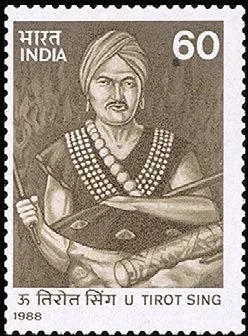
  16. Portrait of U Tirot Sing (India Post commemorative stamp, 1988)
    India Post commemorative stamp, 1988

    Freedom Fighters · Unsung Heroes

    U Tirot Sing

    died 1835

    Khasi chief who led a four-year war against British expansion into the hills of Meghalaya.

    U Tirot Sing, Syiem (chief) of Nongkhlaw in the Khasi Hills, resisted British plans to build a road through Khasi territory. The Anglo-Khasi War of 1829–1833 followed. He was captured and died in British custody in Dhaka in 1835.

    Movement and contribution
    Anglo-Khasi War, 1829–1833Resistance to British expansion in the Khasi Hills.
    Legacy
    17 July, the anniversary of his death, is observed in Meghalaya as U Tirot Sing Day.
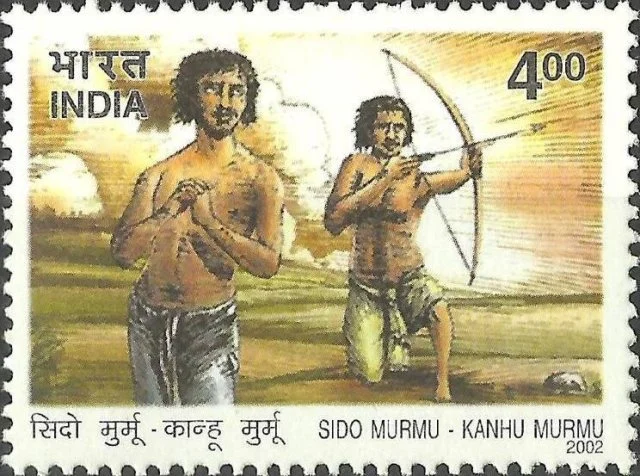
  17. Portrait of Sidhu and Kanhu Murmu (India Post commemorative stamp, 2002)
    India Post commemorative stamp, 2002

    Freedom Fighters · Unsung Heroes

    Sidhu and Kanhu Murmu

    died 1855–56

    Brothers who led the Santhal Hul of 1855, one of the great Adivasi uprisings against colonial rule.

    On 30 June 1855 the brothers Sidhu and Kanhu Murmu called thousands of Santhals together at Bhognadih and launched the Hul (rebellion) against oppressive moneylenders, landlords and the East India Company that supported them. The uprising was suppressed by early 1856 and both brothers were killed.

    Movement and contribution
    Santhal Hul, 1855–56Rajmahal hills, present-day Jharkhand and West Bengal.
    Legacy
    30 June is observed as Hul Diwas. The rebellion led to the creation of the Santhal Parganas as a separate administrative district.
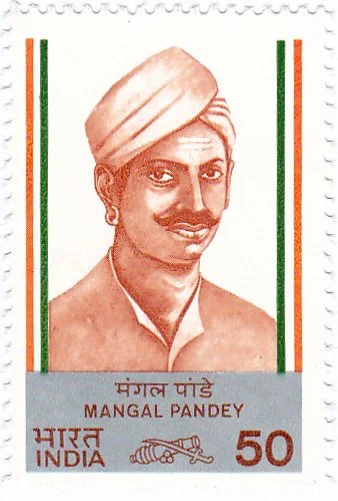
  18. Portrait of Mangal Pandey (India Post commemorative stamp, 1984)
    India Post commemorative stamp, 1984

    Freedom Fighters

    Mangal Pandey

    1827 – 1857

    The sepoy at Barrackpore whose act of defiance in March 1857 is remembered as a prelude to the great uprising.

    Mangal Pandey was a sepoy of the 34th Bengal Native Infantry. On 29 March 1857 at Barrackpore he attacked British officers and called on fellow soldiers to rise. He was court-martialled and hanged on 8 April 1857, weeks before the uprising began at Meerut.

    Movement and contribution
    34th Bengal Native Infantry, Barrackpore29 March 1857.
    Legacy
    Widely remembered as one of the first heroes of 1857; India Post issued a stamp in his honour in 1984.
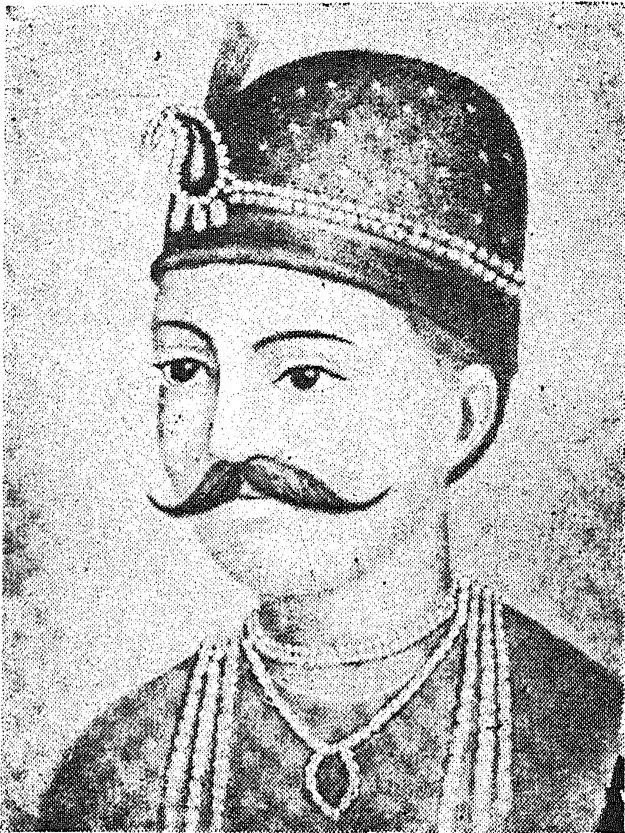
  19. Portrait of Tatya Tope (Period illustration)
    Period illustration

    Freedom Fighters

    Tatya Tope

    1814 – 1859

    One of the most capable commanders of 1857, who fought on for nearly a year after the fall of Jhansi.

    Tatya Tope (Ramachandra Pandurang Tope) was a close associate of Nana Sahib and a leading commander of the 1857 uprising. He fought at Kanpur, joined Rani Lakshmibai, took part in the capture of Gwalior and then conducted a long guerrilla campaign across central India until his capture in April 1859.

    Movement and contribution
    The Uprising of 1857Kanpur, Kalpi, Gwalior and the central India campaign of 1858–59.
    Legacy
    Remembered for his skill and persistence in a long campaign against superior forces.
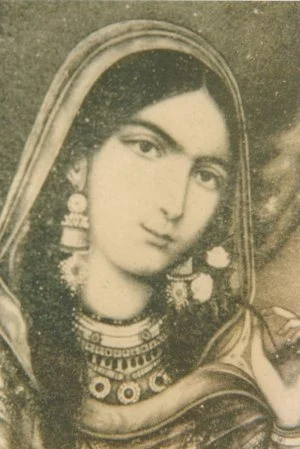
  20. Portrait of Begum Hazrat Mahal (Painted portrait)
    Painted portrait

    Freedom Fighters

    Begum Hazrat Mahal

    c. 1820 – 1879

    The Begum of Awadh who led the uprising in Lucknow and refused to accept British terms.

    After the East India Company annexed Awadh and exiled Nawab Wajid Ali Shah, Begum Hazrat Mahal became a leader of the 1857 uprising in Lucknow, proclaiming her young son Birjis Qadr as ruler. After Lucknow fell she rejected British offers of a pension and lived the rest of her life in exile in Nepal.

    Movement and contribution
    The Uprising of 1857 in AwadhSiege of the Lucknow Residency, 1857–58.
    Legacy
    India Post issued a stamp in her honour in 1984, and a park in Lucknow is named after her.
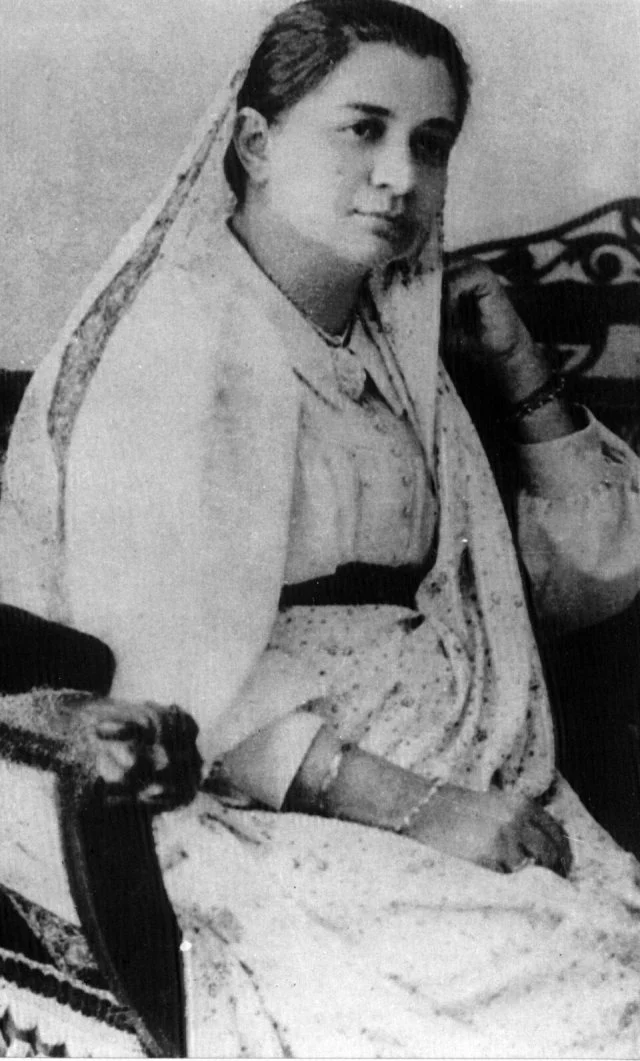
  21. Portrait of Madam Bhikaiji Cama (Photograph)
    Photograph

    Freedom Fighters · Unsung Heroes

    Madam Bhikaiji Cama

    1861 – 1936

    She raised an Indian flag of freedom at an international congress in Stuttgart in 1907.

    Bhikaiji Cama was a nationalist who worked for Indian independence from Europe for more than three decades. At the International Socialist Congress in Stuttgart in August 1907 she unfurled a flag of Indian independence and called for India’s freedom before an international audience.

    Movement and contribution
    Indian nationalists in EuropeStuttgart, 22 August 1907.
    Legacy
    Her 1907 flag is one of the forerunners of India’s national flag; India Post issued a stamp in her honour in 1962.
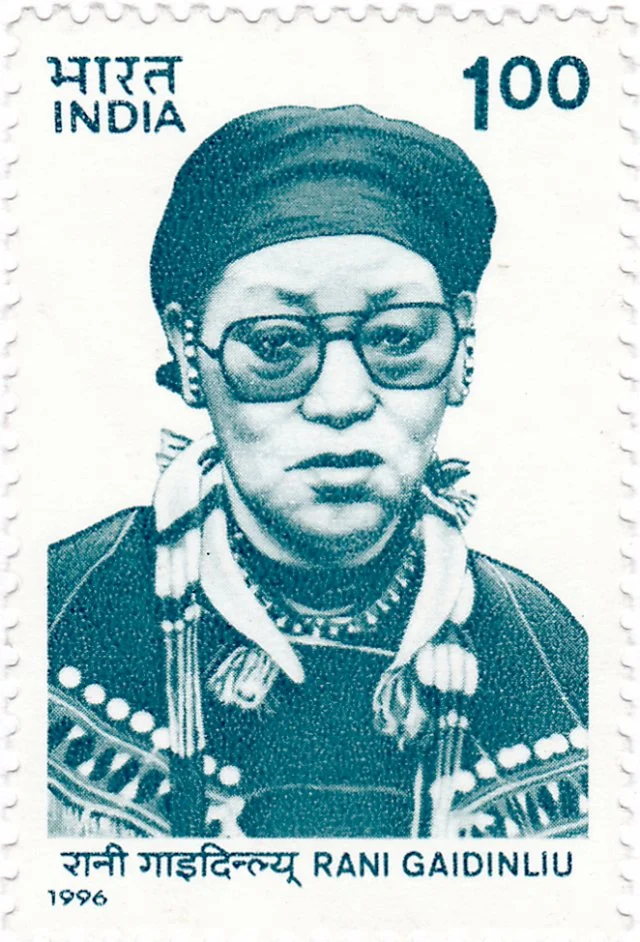
  22. Portrait of Rani Gaidinliu (India Post commemorative stamp, 1996)
    India Post commemorative stamp, 1996

    Freedom Fighters · Unsung Heroes

    Rani Gaidinliu

    1915 – 1993

    A Naga spiritual and political leader who began resisting colonial rule at thirteen and spent fourteen years in prison.

    Gaidinliu joined the Heraka movement of her cousin Haipou Jadonang as a girl and led it after his execution in 1931, resisting British rule in the hills of Manipur, Nagaland and Assam. Captured in 1932, she was imprisoned until India became independent.

    Movement and contribution
    Heraka movement · resistance in the Naga hills1927–1932; imprisoned 1932–1947.
    Legacy
    Jawaharlal Nehru called her ‘Rani’ (queen) after meeting her in prison; she was awarded the Padma Bhushan in 1982.
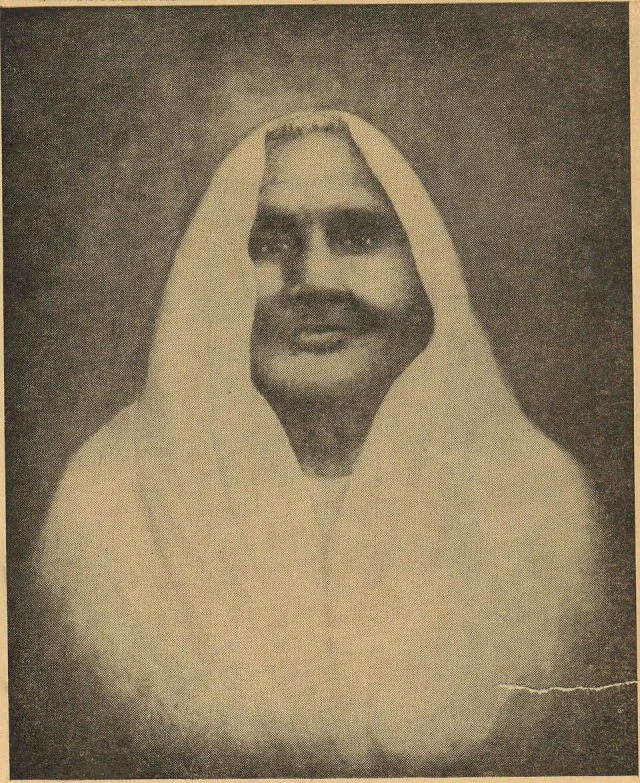
  23. Portrait of Shaheed Matangini Hazra (Photograph)
    Photograph

    Freedom Fighters · Unsung Heroes

    Shaheed Matangini Hazra

    1870 – 1942

    ‘Gandhi Buri’ — in her seventies, she was shot dead leading a Quit India procession, holding the national flag.

    Matangini Hazra joined the freedom movement late in life and took part in Civil Disobedience campaigns. On 29 September 1942, during the Quit India Movement, she led a procession towards the Tamluk police station and was shot dead by police while carrying the national flag.

    Movement and contribution
    Quit India Movement, 1942Tamluk, Midnapore — 29 September 1942.
    Legacy
    Known affectionately as ‘Gandhi Buri’ (the old Gandhian woman), she is one of the most revered martyrs of the Quit India Movement in Bengal.
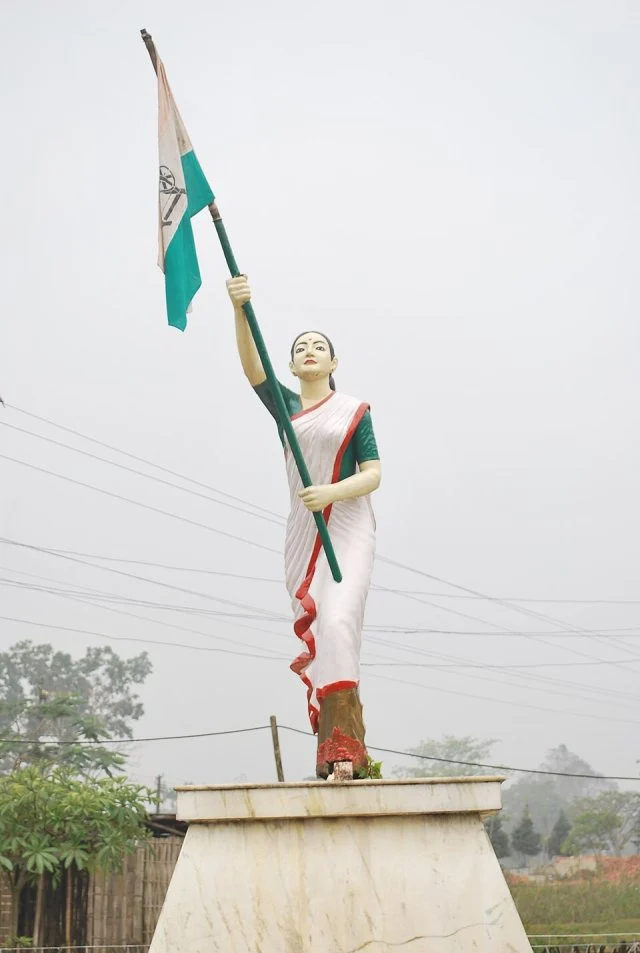
  24. Portrait of Shaheed Kanaklata Barua (Statue of Kanaklata Barua (photograph))
    Statue of Kanaklata Barua (photograph)

    Freedom Fighters · Unsung Heroes

    Shaheed Kanaklata Barua

    1924 – 1942

    At seventeen, she led a procession to raise the national flag at Gohpur police station and was shot dead.

    Kanaklata Barua was a member of the Mrityu Bahini (‘death squad’) volunteers in Assam during the Quit India Movement. On 20 September 1942 she led a procession to hoist the national flag at the Gohpur police station and was killed by police fire.

    Movement and contribution
    Quit India Movement, 1942Gohpur, Assam — 20 September 1942.
    Legacy
    Known as ‘Birbala’, she is honoured across Assam; an Indian Coast Guard patrol vessel bears her name.
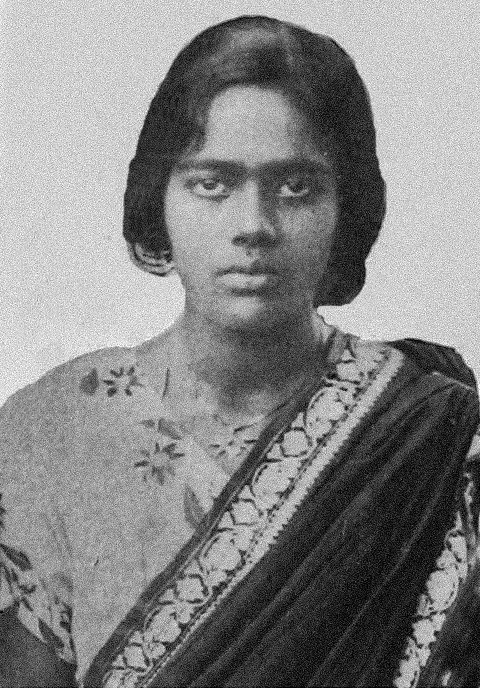
  25. Portrait of Shaheed Pritilata Waddedar (Photograph)
    Photograph

    Revolutionaries · Unsung Heroes

    Shaheed Pritilata Waddedar

    1911 – 1932

    A graduate and schoolteacher who led an armed revolutionary action at twenty-one.

    Pritilata Waddedar joined Surya Sen’s revolutionary group in Chittagong. On 24 September 1932 she led an attack on the Pahartali European Club. Wounded and facing capture, she took her own life.

    Movement and contribution
    Indian Republican Army, ChittagongPahartali European Club attack, 24 September 1932.
    Legacy
    One of the first women to lead an armed revolutionary action in the freedom struggle.
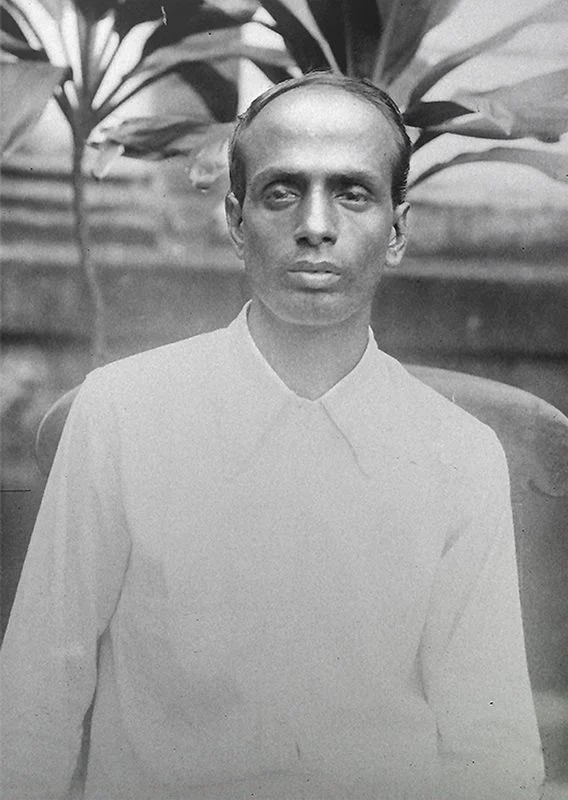
  26. Portrait of Masterda Surya Sen (Photograph, before 1934)
    Photograph, before 1934

    Revolutionaries · Unsung Heroes

    Masterda Surya Sen

    1894 – 1934

    ‘Masterda’, the schoolteacher who led the Chittagong armoury raid of 1930.

    Surya Sen, a schoolteacher known as ‘Masterda’, led the Indian Republican Army in Chittagong. On 18 April 1930 his group seized the police and auxiliary forces armouries and cut communications. He evaded capture for nearly three years and was executed in Chittagong jail in January 1934.

    Movement and contribution
    Chittagong armoury raid, 18 April 1930Battle of Jalalabad Hill, 22 April 1930.
    Legacy
    The Chittagong uprising inspired a generation of young revolutionaries, many of them in their teens.
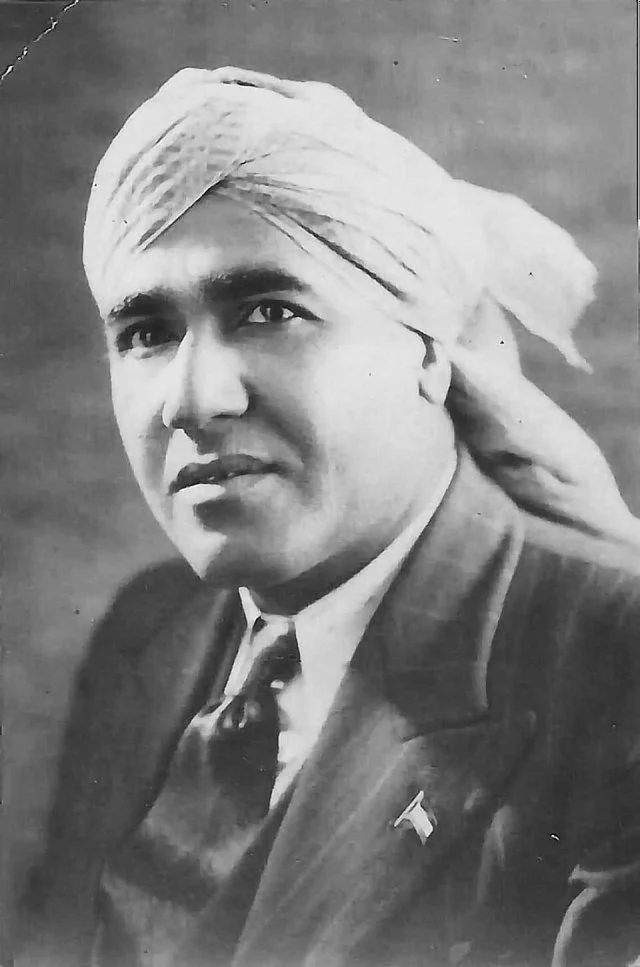
  27. Portrait of Shaheed Udham Singh (Photograph (Punjab State Archives))
    Photograph (Punjab State Archives)

    Freedom Fighters · Revolutionaries

    Shaheed Udham Singh

    1899 – 1940

    He carried the memory of Jallianwala Bagh for twenty-one years.

    Udham Singh was a revolutionary associated with the Ghadar movement and the Hindustan Socialist Republican Association. On 13 March 1940, in Caxton Hall, London, he shot Sir Michael O’Dwyer, who had been Lieutenant Governor of Punjab at the time of the 1919 Jallianwala Bagh massacre. He was hanged in London on 31 July 1940.

    Movement and contribution
    Ghadar movement · HSRACaxton Hall, London — 13 March 1940.
    Legacy
    His remains were returned to India in 1974. He is honoured as ‘Shaheed-i-Azam’ Sardar Udham Singh in Punjab.
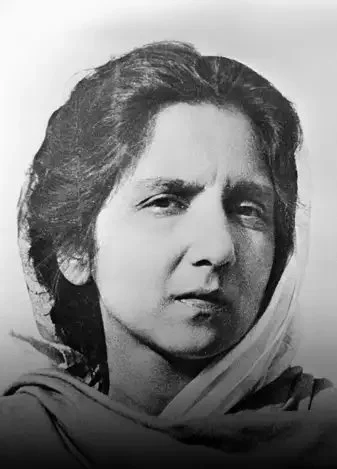
  28. Portrait of Aruna Asaf Ali (Photograph, 1940s)
    Photograph, 1940s

    Freedom Fighters

    Aruna Asaf Ali

    1909 – 1996

    On 9 August 1942 she raised the national flag at Gowalia Tank Maidan, Bombay, as the Quit India Movement began.

    Aruna Asaf Ali was imprisoned during the Salt Satyagraha and became a leading figure of the Quit India Movement. When the movement’s leaders were arrested on 9 August 1942, she hoisted the national flag at Gowalia Tank Maidan in Bombay, then went underground to keep the movement alive.

    Movement and contribution
    Quit India Movement, 1942Gowalia Tank Maidan (August Kranti Maidan), Bombay — 9 August 1942.
    Legacy
    Delhi’s first mayor after Independence; awarded the Bharat Ratna posthumously in 1997.
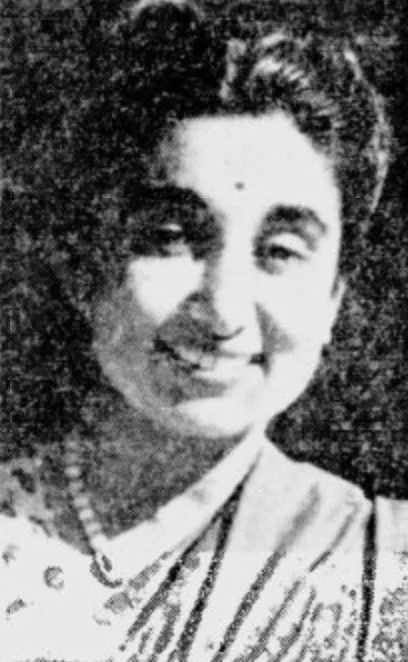
  29. Portrait of Captain Lakshmi Sahgal (Photograph, c. 1945)
    Photograph, c. 1945

    Freedom Fighters

    Captain Lakshmi Sahgal

    1914 – 2012

    A doctor who commanded the Rani of Jhansi Regiment of the Azad Hind Fauj.

    Lakshmi Swaminathan, later Sahgal, was a doctor practising in Singapore when she joined the Indian National Army in 1943. She led its all-women Rani of Jhansi Regiment and served as minister for women’s affairs in the Provisional Government of Free India.

    Movement and contribution
    Indian National ArmyCommander, Rani of Jhansi Regiment (1943–45).
    Legacy
    She continued to practise medicine in Kanpur for decades, and was awarded the Padma Vibhushan in 1998.
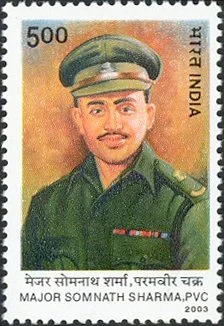
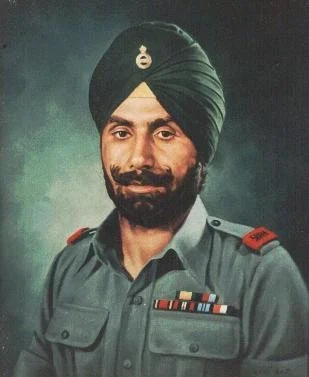
  30. Portrait of Somnath Sharma (India Post commemorative stamp, 2003)
    India Post commemorative stamp, 2003

    Brave Soldiers · Param Vir Chakra

    Somnath Sharma

    Major · 1923 – 1947

    The first recipient of the Param Vir Chakra, who held the line at Badgam to save Srinagar.

    On 3 November 1947 Major Somnath Sharma’s company of 4 Kumaon was attacked at Badgam, near Srinagar airfield, by a much larger force of raiders. He held his position until he was killed, buying time for reinforcements to secure the airfield on which the defence of Srinagar depended.

    Honour and action
    Param Vir Chakra (posthumous)Battle of Badgam, Jammu and Kashmir — 3 November 1947.
    Legacy
    As the first recipient of India’s highest wartime gallantry award, his name stands first on the roll of the Param Vir Chakra.
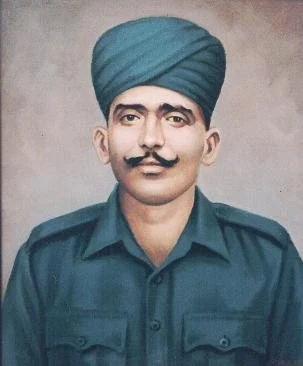
  31. Portrait of Jadunath Singh (Official portrait (painting))
    Official portrait (painting)

    Brave Soldiers · Param Vir Chakra

    Jadunath Singh

    Naik · 1916 – 1948

    He held a forward post at Taindhar against three successive attacks.

    On 6 February 1948, near Naushera in Jammu and Kashmir, Naik Jadunath Singh commanded a small forward post of 1 Rajput at Taindhar. Heavily outnumbered, his section repulsed repeated attacks; he was killed leading the defence against the third.

    Honour and action
    Param Vir Chakra (posthumous)Taindhar, Naushera sector — 6 February 1948.
    Legacy
    His stand helped secure Naushera at a critical point in the 1947–48 war.
  32. Portrait of Rama Raghoba Rane (Official portrait (painting))
    Official portrait (painting)

    Brave Soldiers · Param Vir Chakra

    Rama Raghoba Rane

    Second Lieutenant · 1918 – 1994

    A combat engineer who cleared mines and roadblocks under fire to open the road to Rajouri.

    In April 1948 Second Lieutenant Rama Raghoba Rane of the Bombay Sappers worked under heavy fire to clear minefields and roadblocks on the route from Naushera to Rajouri, opening the way for Indian tanks and troops. He was wounded but continued for several days.

    Honour and action
    Param Vir ChakraNaushera–Rajouri axis, Jammu and Kashmir — April 1948.
    Legacy
    He showed that the engineers who open the way for others can display the very highest courage.
  33. Portrait of Piru Singh Shekhawat (Official portrait (painting))
    Official portrait (painting)

    Brave Soldiers · Param Vir Chakra

    Piru Singh Shekhawat

    Company Havildar Major · 1918 – 1948

    With his company struck down around him, he pressed on alone against the enemy posts at Tithwal.

    On 18 July 1948, in an attack on enemy positions at Tithwal, Company Havildar Major Piru Singh’s company suffered heavy casualties. Wounded, he went on to clear an enemy machine-gun post and continued towards the next position until he was killed.

    Honour and action
    Param Vir Chakra (posthumous)Tithwal, Jammu and Kashmir — 18 July 1948.
    Legacy
    His solitary advance is among the most remarkable acts recorded in the history of the Param Vir Chakra.
  34. Portrait of Karam Singh (Official portrait (painting))
    Official portrait (painting)

    Brave Soldiers · Param Vir Chakra

    Karam Singh

    Lance Naik (later Subedar and Honorary Captain) · 1915 – 1993

    Twice wounded, he refused to be evacuated and held the post at Richhmar Gali.

    On 13 October 1948, at Richhmar Gali near Tithwal, Lance Naik Karam Singh of 1 Sikh held a forward post through repeated enemy attacks. Though wounded, he kept moving between trenches, encouraging his men and leading counter-attacks until the post was secure.

    Honour and action
    Param Vir ChakraRichhmar Gali, Tithwal sector — 13 October 1948.
    Legacy
    One of the first living recipients of the Param Vir Chakra; he had already been decorated for bravery in the Second World War.
  35. Portrait of Gurbachan Singh Salaria (Official portrait (painting))
    Official portrait (painting)

    Brave Soldiers · Param Vir Chakra

    Gurbachan Singh Salaria

    Captain · 1935 – 1961

    The only Param Vir Chakra recipient honoured for service in a United Nations peacekeeping mission.

    Serving with the United Nations Operation in the Congo, Captain Gurbachan Singh Salaria led a small force against a much larger group of Katangese gendarmes at a roadblock near Elisabethville on 5 December 1961. He was mortally wounded in the action.

    Honour and action
    Param Vir Chakra (posthumous)UN Operation in the Congo, Elisabethville — 5 December 1961.
    Legacy
    He represents India’s long tradition of service in United Nations peacekeeping.
  36. Portrait of Dhan Singh Thapa (Official portrait (painting))
    Official portrait (painting)

    Brave Soldiers · Param Vir Chakra

    Dhan Singh Thapa

    Major · 1928 – 2005

    He held Srijap-1 on the shores of Pangong Lake against repeated attacks in 1962.

    In October 1962 Major Dhan Singh Thapa commanded the Srijap-1 post on the northern bank of Pangong Lake in Ladakh. His small force repulsed three attacks before being overrun. He was taken prisoner and, initially believed killed, returned after the war.

    Honour and action
    Param Vir ChakraSrijap-1, Pangong Lake, Ladakh — 21 October 1962.
    Legacy
    His defence of Srijap is one of the outstanding stands of the 1962 war.
  37. Portrait of Joginder Singh (Official portrait (painting))
    Official portrait (painting)

    Brave Soldiers · Param Vir Chakra

    Joginder Singh

    Subedar · 1921 – 1962

    Wounded and outnumbered at Bum La, he led his men in a final charge.

    On 23 October 1962 Subedar Joginder Singh’s platoon of 1 Sikh defended a ridge near Bum La in the North-East Frontier Agency (now Arunachal Pradesh) against waves of attackers. Wounded, he fought on and led his remaining men forward when their ammunition ran out. He was captured and died of his wounds in captivity.

    Honour and action
    Param Vir Chakra (posthumous)Bum La, Tawang sector — 23 October 1962.
    Legacy
    His stand delayed the advance towards Tawang and is honoured in the Sikh Regiment and beyond.
  38. Portrait of Shaitan Singh Bhati (Official portrait (painting))
    Official portrait (painting)

    Brave Soldiers · Param Vir Chakra

    Shaitan Singh Bhati

    Major · 1924 – 1962

    Commander of C Company at Rezang La, where his men fought almost to the last.

    On 18 November 1962 Major Shaitan Singh’s C Company of 13 Kumaon defended Rezang La, a pass in Ladakh guarding the approach to Chushul, against a much larger force. He moved between his platoon positions under fire to organise the defence until he was mortally wounded.

    Honour and action
    Param Vir Chakra (posthumous)Battle of Rezang La, Ladakh — 18 November 1962.
    Legacy
    The stand at Rezang La is among the most celebrated actions in Indian military history; a memorial stands at Chushul.
  39. Portrait of Abdul Hamid (Official portrait (painting))
    Official portrait (painting)

    Brave Soldiers · Param Vir Chakra

    Abdul Hamid

    Company Quartermaster Havildar · 1933 – 1965

    With a jeep-mounted recoilless gun, he destroyed enemy tanks at Asal Uttar.

    During the Battle of Asal Uttar in the Khem Karan sector in September 1965, CQMH Abdul Hamid used a jeep-mounted recoilless gun to engage advancing enemy tanks, destroying several before he was killed on 10 September 1965.

    Honour and action
    Param Vir Chakra (posthumous)Battle of Asal Uttar, Khem Karan sector, Punjab — 9–10 September 1965.
    Legacy
    Asal Uttar became a turning point of the 1965 war; India Post issued a stamp in his honour in 2000.
  40. Portrait of Ardeshir Burzorji Tarapore (Official portrait (painting))
    Official portrait (painting)

    Brave Soldiers · Param Vir Chakra

    Ardeshir Burzorji Tarapore

    Lieutenant Colonel · 1923 – 1965

    Commanding officer of the Poona Horse, who led his regiment from the front through six days of tank battles.

    During the 1965 war, Lieutenant Colonel A. B. Tarapore commanded 17 Horse in a series of armoured battles in the Sialkot sector between 11 and 16 September. Though wounded, he refused evacuation and continued to lead his regiment until he was killed on 16 September.

    Honour and action
    Param Vir Chakra (posthumous)Sialkot sector (Phillora, Chawinda) — 11–16 September 1965.
    Legacy
    Under his leadership the Poona Horse played a central role in some of the largest tank battles of the 1965 war.
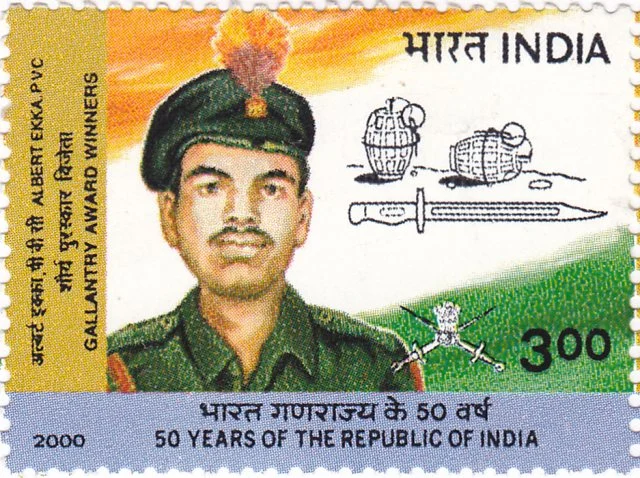
  41. Portrait of Albert Ekka (India Post commemorative stamp, 2000)
    India Post commemorative stamp, 2000

    Brave Soldiers · Param Vir Chakra

    Albert Ekka

    Lance Naik · 1942 – 1971

    At Gangasagar on the eastern front, he silenced enemy guns at the cost of his life.

    On 3 December 1971, during the attack on enemy positions at Gangasagar near Agartala, Lance Naik Albert Ekka of 14 Guards charged and silenced enemy machine-gun positions that were holding up his company’s advance. He was mortally wounded in the action.

    Honour and action
    Param Vir Chakra (posthumous)Battle of Gangasagar, eastern front — 3 December 1971.
    Legacy
    India Post issued a stamp in his honour in 2000, and he is widely honoured in Jharkhand.
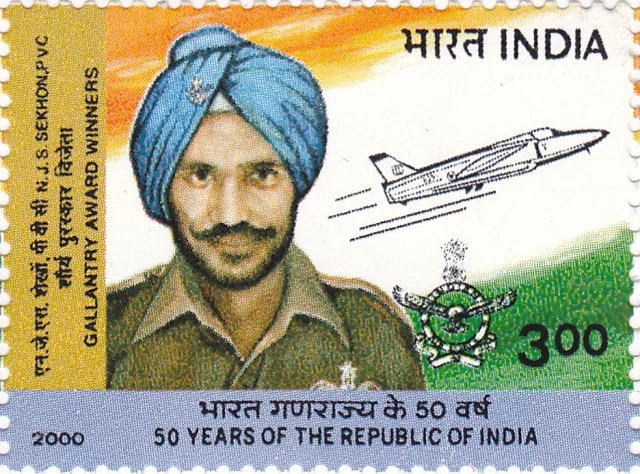
  42. Portrait of Nirmal Jit Singh Sekhon (India Post commemorative stamp, 2000)
    India Post commemorative stamp, 2000

    Brave Soldiers · Param Vir Chakra

    Nirmal Jit Singh Sekhon

    Flying Officer · 1945 – 1971

    The only member of the Indian Air Force to receive the Param Vir Chakra.

    On 14 December 1971, when Pakistan Air Force aircraft attacked Srinagar air base, Flying Officer Nirmal Jit Singh Sekhon took off in his Folland Gnat during the raid and engaged the attacking aircraft alone. He was shot down and killed.

    Honour and action
    Param Vir Chakra (posthumous)Srinagar air base — 14 December 1971.
    Legacy
    He remains the only Indian Air Force recipient of the Param Vir Chakra; his remains and the exact crash site have never been found.
  43. Portrait of Hoshiar Singh Dahiya (Official portrait (painting))
    Official portrait (painting)

    Brave Soldiers · Param Vir Chakra

    Hoshiar Singh Dahiya

    Major · 1936 – 1998

    Wounded, he held Jarpal against repeated counter-attacks in the Battle of Basantar.

    Between 15 and 17 December 1971, in the Shakargarh sector, Major Hoshiar Singh’s company of 3 Grenadiers captured and held the position at Jarpal against repeated counter-attacks. Though seriously wounded, he refused evacuation until the fighting was over.

    Honour and action
    Param Vir ChakraJarpal, Battle of Basantar, Shakargarh sector — 15–17 December 1971.
    Legacy
    He later rose to the rank of Colonel; his courage is honoured by the Grenadiers.
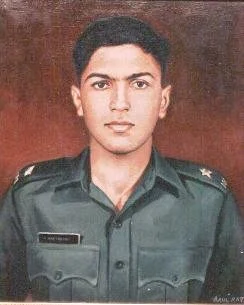
  44. Portrait of Arun Khetarpal (Official portrait (painting))
    Official portrait (painting)

    Brave Soldiers · Param Vir Chakra

    Arun Khetarpal

    Second Lieutenant · 1950 – 1971

    A twenty-one-year-old tank commander who refused to abandon his burning tank at Basantar.

    On 16 December 1971, during the Battle of Basantar, Second Lieutenant Arun Khetarpal of the Poona Horse engaged enemy tanks counter-attacking Indian positions at Jarpal. His tank was hit, but he continued to fight until he was killed.

    Honour and action
    Param Vir Chakra (posthumous)Battle of Basantar, Jarpal — 16 December 1971.
    Legacy
    One of the youngest Param Vir Chakra recipients; the Poona Horse honours him as a symbol of its spirit.
  45. Portrait of Bana Singh (Photograph)
    Photograph

    Brave Soldiers · Param Vir Chakra

    Bana Singh

    Naib Subedar (later Subedar Major and Honorary Captain) · born 1949

    He led the assault on the highest post on the Siachen Glacier, now named Bana Post.

    In June 1987, during Operation Rajiv on the Siachen Glacier, Naib Subedar Bana Singh led a small team up a sheer ice wall at extreme altitude to capture an enemy post at the highest point in the area. The post was renamed Bana Post in his honour.

    Honour and action
    Param Vir ChakraOperation Rajiv, Siachen Glacier — 26 June 1987.
    Legacy
    Bana Post, on the Siachen Glacier, bears his name.
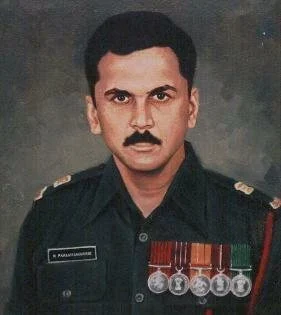
  46. Portrait of Ramaswamy Parameswaran (Official portrait (painting))
    Official portrait (painting)

    Brave Soldiers · Param Vir Chakra

    Ramaswamy Parameswaran

    Major · 1946 – 1987

    Ambushed in Sri Lanka, he turned the attack and fought on though mortally wounded.

    On 25 November 1987, while serving with the Indian Peace Keeping Force in Sri Lanka, Major Ramaswamy Parameswaran’s party was ambushed after a search operation. He led a counter-attack against the ambushers and was mortally wounded in close combat.

    Honour and action
    Param Vir Chakra (posthumous)Operation Pawan, Sri Lanka — 25 November 1987.
    Legacy
    He is the only Param Vir Chakra recipient from the Indian Peace Keeping Force operations in Sri Lanka.
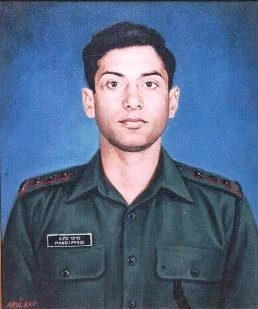
  47. Portrait of Manoj Kumar Pandey (Official portrait (painting))
    Official portrait (painting)

    Brave Soldiers · Param Vir Chakra

    Manoj Kumar Pandey

    Captain · 1975 – 1999

    He cleared enemy bunkers on the Khalubar ridge in Kargil and fell at the last of them.

    During the Kargil conflict, on the night of 2–3 July 1999, Manoj Kumar Pandey of 1/11 Gorkha Rifles led his platoon in an attack on enemy positions at Khalubar in the Batalik sector. He cleared successive bunkers despite being wounded and was killed as the final position was taken.

    Honour and action
    Param Vir Chakra (posthumous)Operation Vijay, Khalubar, Batalik sector — 3 July 1999.
    Legacy
    His leadership is honoured by the Gorkha Rifles and at the National Defence Academy, where he trained.
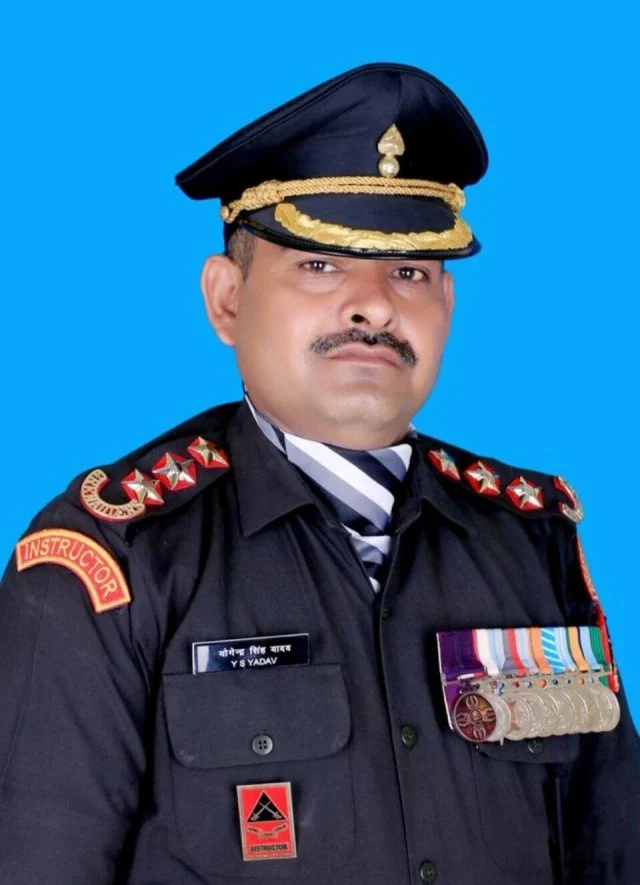
  48. Portrait of Yogendra Singh Yadav (Official photograph)
    Official photograph

    Brave Soldiers · Param Vir Chakra

    Yogendra Singh Yadav

    Grenadier (later Subedar Major and Honorary Captain) · born 1980

    The youngest recipient of the Param Vir Chakra — he was nineteen at Tiger Hill.

    On the night of 3–4 July 1999, Grenadier Yogendra Singh Yadav was part of the lead team assaulting Tiger Hill in the Kargil conflict. Climbing a sheer cliff under fire and wounded several times, he continued to fight and helped his comrades capture the position.

    Honour and action
    Param Vir ChakraOperation Vijay, Tiger Hill — 4 July 1999.
    Legacy
    He is the youngest person to have received the Param Vir Chakra.
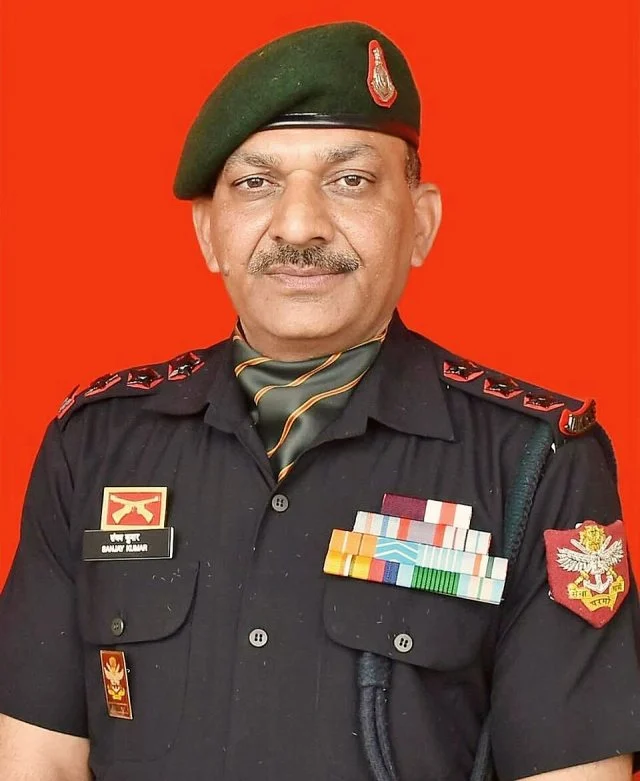
  49. Portrait of Sanjay Kumar (Official photograph)
    Official photograph

    Brave Soldiers · Param Vir Chakra

    Sanjay Kumar

    Rifleman (later Subedar Major and Honorary Captain) · born 1976

    Wounded, he charged an enemy machine-gun post and turned its weapon against the enemy.

    On 4 July 1999, during the attack on Area Flat Top near Point 4875 in the Mushkoh valley, Rifleman Sanjay Kumar led the assault on an enemy position. Despite serious wounds, he charged a machine-gun post, captured the weapon and used it against the enemy.

    Honour and action
    Param Vir ChakraOperation Vijay, Area Flat Top, Mushkoh valley — 4 July 1999.
    Legacy
    His action helped secure a key feature in the battle for Point 4875.
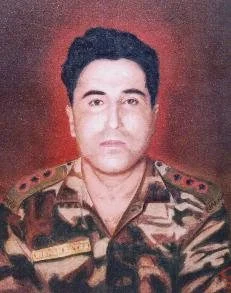
  50. Portrait of Vikram Batra (Official portrait (painting))
    Official portrait (painting)

    Brave Soldiers · Param Vir Chakra

    Vikram Batra

    Captain · 1974 – 1999

    He captured Point 5140 and fell at Point 4875 while going to the aid of a wounded comrade.

    During the Kargil conflict, Captain Vikram Batra led the capture of Point 5140 on 20 June 1999. In early July his company attacked Point 4875, and on 7 July he was killed while trying to rescue a wounded officer.

    Honour and action
    Param Vir Chakra (posthumous)Operation Vijay — Point 5140 (20 June 1999) and Point 4875 (7 July 1999).
    Legacy
    Point 4875 is now known as Batra Top. His courage and leadership made him one of the most widely remembered soldiers of Kargil.
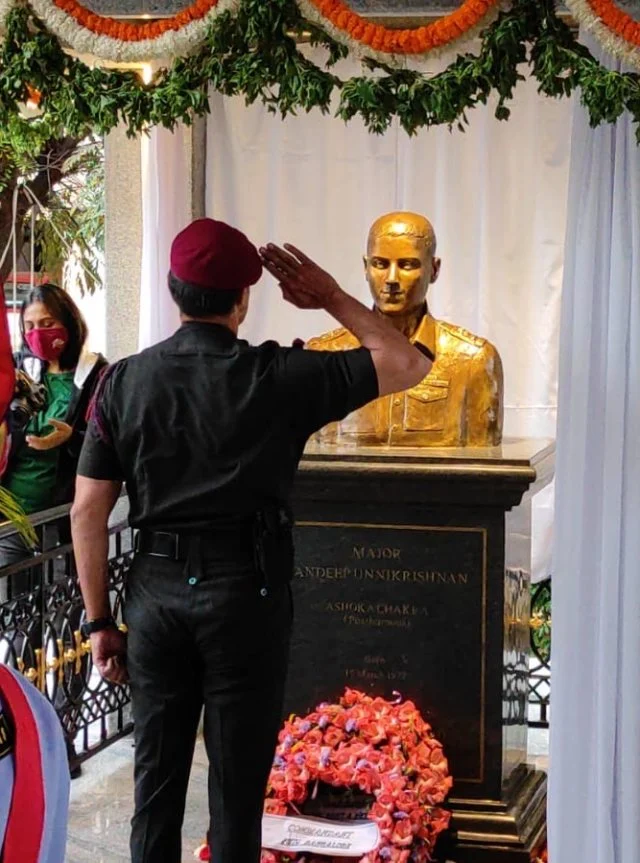
  51. Portrait of Sandeep Unnikrishnan (Memorial bust, Bengaluru (photograph))
    Memorial bust, Bengaluru (photograph)

    Brave Soldiers

    Sandeep Unnikrishnan

    Major · 1977 – 2008

    He led NSG commandos into the Taj Mahal Palace hotel during the 2008 Mumbai attacks.

    Major Sandeep Unnikrishnan was serving with the 51 Special Action Group of the National Security Guard when terrorists attacked Mumbai in November 2008. He led his team in the operation to rescue hostages at the Taj Mahal Palace hotel and was killed on 28 November 2008. He was awarded the Ashoka Chakra, India’s highest peacetime gallantry award.

    Honour and action
    Ashoka Chakra (posthumous)Operation Black Tornado, Mumbai — 26–28 November 2008.
    Legacy
    Roads, schools and memorials in Bengaluru and elsewhere honour him.

Freedom fighters and revolutionaries

Those who fought for Bharat’s freedom

29 heroes

From the first resistance to the East India Company to the Quit India Movement and the Azad Hind Fauj — leaders, revolutionaries and ordinary people who risked everything for independence.

  • Portrait of Netaji Subhas Chandra Bose (Photograph)

    NetajiSubhas Chandra Bose

    1897 – 1945 (see note)

    The leader who took the struggle for freedom beyond India’s borders and raised the Azad Hind Fauj.

    Movement and contribution
    Indian National Army · Provisional Government of Free India (1943)Led the Azad Hind Fauj in the 1944 campaign on India’s north-eastern frontier.
    Legacy
    The INA trials of 1945–46 stirred the country, and his call for complete independence continues to inspire. His birth anniversary, 23 January, is observed as Parakram Diwas.
  • Portrait of Shaheed Bhagat Singh (Photograph, 1929)

    ShaheedBhagat Singh

    1907 – 1931

    A revolutionary thinker who gave his life at twenty-three and whose ideas outlived the gallows.

    Movement and contribution
    Hindustan Socialist Republican AssociationCentral Legislative Assembly protest, 8 April 1929; Lahore Conspiracy Case.
    Legacy
    His writings from prison and his courage before execution made him one of the most enduring symbols of the freedom struggle. 23 March is remembered as Shaheed Diwas.
  • Portrait of Chandrashekhar Azad (Photograph)

    Chandrashekhar Azad

    1906 – 1931

    The revolutionary who called himself ‘Azad’ — free — and kept that promise to the end.

    Movement and contribution
    Hindustan Socialist Republican AssociationKakori train action (1925); commander-in-chief of the HSRA.
    Legacy
    The park in Prayagraj where he fell now bears his name — Chandrashekhar Azad Park.
  • Portrait of Shaheed Sukhdev Thapar (Photograph)

    ShaheedSukhdev Thapar

    1907 – 1931

    The organiser behind the revolutionary movement in Punjab, who went to the gallows beside Bhagat Singh and Rajguru.

    Movement and contribution
    Hindustan Socialist Republican Association · Naujawan Bharat SabhaLahore Conspiracy Case, 1929–31.
    Legacy
    He is remembered every year on Shaheed Diwas, 23 March, alongside Bhagat Singh and Rajguru.
  • Portrait of Shaheed Shivaram Hari Rajguru (Photograph)

    ShaheedShivaram Hari Rajguru

    1908 – 1931

    A young revolutionary from Maharashtra who stood with his comrades to the very end.

    Movement and contribution
    Hindustan Socialist Republican AssociationLahore action, December 1928; Lahore Conspiracy Case.
    Legacy
    His birthplace, Khed, was renamed Rajgurunagar in his honour.
  • Portrait of Shaheed Ram Prasad Bismil (Photograph (from a roll of honour))

    ShaheedRam Prasad Bismil

    1897 – 1927

    Poet and revolutionary — a founder of the Hindustan Republican Association and leader of the Kakori action.

    Movement and contribution
    Hindustan Republican AssociationKakori train action, 9 August 1925.
    Legacy
    His friendship with Ashfaqulla Khan, who was executed the same day, remains a celebrated symbol of unity in the freedom struggle.
  • Portrait of Shaheed Ashfaqulla Khan (Photograph, c. 1920s)

    ShaheedAshfaqulla Khan

    1900 – 1927

    Poet, revolutionary and Bismil’s closest comrade, who chose the gallows over betraying the cause.

    Movement and contribution
    Hindustan Republican AssociationKakori train action, 9 August 1925.
    Legacy
    His friendship with Ram Prasad Bismil is remembered as an enduring example of Hindu–Muslim unity in the freedom struggle.
  • Portrait of Shaheed Khudiram Bose (Photograph, c. 1905)

    ShaheedKhudiram Bose

    1889 – 1908

    One of the youngest revolutionaries executed by the colonial government — he was eighteen.

    Movement and contribution
    Revolutionary movement in Bengal (Jugantar circle)Muzaffarpur, 30 April 1908.
    Legacy
    His youth and composure at his execution made him a folk hero in Bengal, remembered in songs that are still sung today.
  • Portrait of Rani Lakshmibai of Jhansi (Painted portrait (posthumous, 19th century))

    Rani Lakshmibai of Jhansi

    c. 1828 – 1858

    The queen of Jhansi who fought at the head of her forces in 1857 and fell in battle.

    Movement and contribution
    The Uprising of 1857Defence of Jhansi (1858); battles at Kalpi and Gwalior.
    Legacy
    One of the most celebrated figures in Indian history, she is remembered as a symbol of courage and resistance — the INA’s women’s regiment was named after her.
  • Portrait of Veer Vinayak Damodar Savarkar (Photograph)

    VeerVinayak Damodar Savarkar

    1883 – 1966

    Revolutionary organiser, writer and long-term political prisoner of the Cellular Jail.

    Movement and contribution
    Abhinav Bharat · India House, LondonAuthor of ‘The Indian War of Independence of 1857’ (1909).
    Legacy
    A significant and debated figure in modern Indian history, remembered by many for his revolutionary work and long imprisonment.
  • Portrait of Alluri Sitarama Raju (India Post commemorative stamp, 1986)

    Alluri Sitarama Raju

    1897 – 1924

    Leader of the Rampa Rebellion, who stood with the forest communities of the Eastern Ghats against colonial rule.

    Movement and contribution
    Rampa Rebellion, 1922–24Raids on police stations at Chintapalli, Krishnadevipeta and Rajavommangi, August 1922.
    Legacy
    Revered in Andhra Pradesh as ‘Manyam Veerudu’ — hero of the forests. India Post issued a stamp in his honour in 1986.
  • Portrait of Dharti Aaba Birsa Munda (Photograph (published in S. C. Roy, 1912))

    Dharti AabaBirsa Munda

    1875 – 1900

    ‘Father of the Earth’ — the young Munda leader of the Ulgulan, the great tumult of 1899–1900.

    Movement and contribution
    The Ulgulan (Munda uprising), 1899–1900Chotanagpur plateau, present-day Jharkhand.
    Legacy
    His birth anniversary, 15 November, is observed nationally as Janjatiya Gaurav Divas; it is also the foundation day of Jharkhand.
  • Portrait of Rani Velu Nachiyar (India Post commemorative stamp, 2008)

    Rani Velu Nachiyar

    1730 – 1796

    Queen of Sivaganga, who regained her kingdom from the East India Company decades before 1857.

    Movement and contribution
    Recovery of Sivaganga, 1780Early armed resistance to East India Company expansion in southern India.
    Legacy
    Remembered in Tamil Nadu as ‘Veeramangai’ — the brave woman; India Post issued a stamp in her honour in 2008.
  • Portrait of Veerapandiya Kattabomman (India Post commemorative stamp, 1999)

    Veerapandiya Kattabomman

    1760 – 1799

    The palayakkarar of Panchalankurichi who refused to pay tribute to the East India Company.

    Movement and contribution
    Resistance of the palayakkarars, 1790sSiege of Panchalankurichi, 1799.
    Legacy
    One of the earliest symbols of resistance to Company rule in southern India; India Post honoured him with a stamp in 1999.
  • Portrait of Rani Chennamma of Kittur (Statue of Rani Chennamma (photograph))

    Rani Chennamma of Kittur

    1778 – 1829

    The queen of Kittur whose forces defeated the East India Company in 1824.

    Movement and contribution
    Kittur rebellion, 1824Defeat of Company troops at Kittur, October 1824.
    Legacy
    A statue of Rani Chennamma stands in the Parliament complex in New Delhi; Kittur Utsava celebrates her victory each year.
  • Portrait of U Tirot Sing (India Post commemorative stamp, 1988)

    U Tirot Sing

    died 1835

    Khasi chief who led a four-year war against British expansion into the hills of Meghalaya.

    Movement and contribution
    Anglo-Khasi War, 1829–1833Resistance to British expansion in the Khasi Hills.
    Legacy
    17 July, the anniversary of his death, is observed in Meghalaya as U Tirot Sing Day.
  • Portrait of Sidhu and Kanhu Murmu (India Post commemorative stamp, 2002)

    Sidhu and Kanhu Murmu

    died 1855–56

    Brothers who led the Santhal Hul of 1855, one of the great Adivasi uprisings against colonial rule.

    Movement and contribution
    Santhal Hul, 1855–56Rajmahal hills, present-day Jharkhand and West Bengal.
    Legacy
    30 June is observed as Hul Diwas. The rebellion led to the creation of the Santhal Parganas as a separate administrative district.
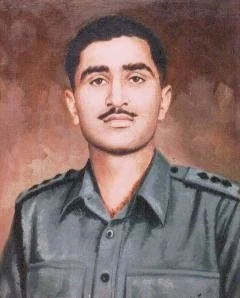
  • Portrait of Mangal Pandey (India Post commemorative stamp, 1984)

    Mangal Pandey

    1827 – 1857

    The sepoy at Barrackpore whose act of defiance in March 1857 is remembered as a prelude to the great uprising.

    Movement and contribution
    34th Bengal Native Infantry, Barrackpore29 March 1857.
    Legacy
    Widely remembered as one of the first heroes of 1857; India Post issued a stamp in his honour in 1984.
  • Portrait of Tatya Tope (Period illustration)

    Tatya Tope

    1814 – 1859

    One of the most capable commanders of 1857, who fought on for nearly a year after the fall of Jhansi.

    Movement and contribution
    The Uprising of 1857Kanpur, Kalpi, Gwalior and the central India campaign of 1858–59.
    Legacy
    Remembered for his skill and persistence in a long campaign against superior forces.
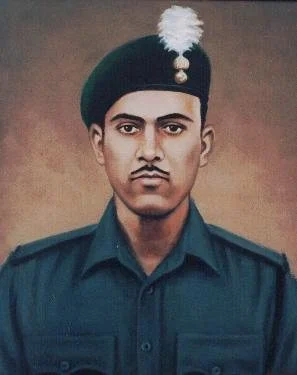
  • Portrait of Begum Hazrat Mahal (Painted portrait)

    Begum Hazrat Mahal

    c. 1820 – 1879
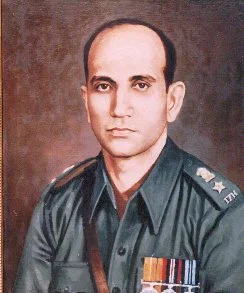
    The Begum of Awadh who led the uprising in Lucknow and refused to accept British terms.

    Movement and contribution
    The Uprising of 1857 in AwadhSiege of the Lucknow Residency, 1857–58.
    Legacy
    India Post issued a stamp in her honour in 1984, and a park in Lucknow is named after her.
  • Portrait of Madam Bhikaiji Cama (Photograph)

    MadamBhikaiji Cama

    1861 – 1936

    She raised an Indian flag of freedom at an international congress in Stuttgart in 1907.

    Movement and contribution
    Indian nationalists in EuropeStuttgart, 22 August 1907.
    Legacy
    Her 1907 flag is one of the forerunners of India’s national flag; India Post issued a stamp in her honour in 1962.
  • Portrait of Rani Gaidinliu (India Post commemorative stamp, 1996)

    Rani Gaidinliu

    1915 – 1993

    A Naga spiritual and political leader who began resisting colonial rule at thirteen and spent fourteen years in prison.

    Movement and contribution
    Heraka movement · resistance in the Naga hills1927–1932; imprisoned 1932–1947.
    Legacy
    Jawaharlal Nehru called her ‘Rani’ (queen) after meeting her in prison; she was awarded the Padma Bhushan in 1982.
  • Portrait of Shaheed Matangini Hazra (Photograph)

    ShaheedMatangini Hazra

    1870 – 1942

    ‘Gandhi Buri’ — in her seventies, she was shot dead leading a Quit India procession, holding the national flag.

    Movement and contribution
    Quit India Movement, 1942Tamluk, Midnapore — 29 September 1942.
    Legacy
    Known affectionately as ‘Gandhi Buri’ (the old Gandhian woman), she is one of the most revered martyrs of the Quit India Movement in Bengal.
  • Portrait of Shaheed Kanaklata Barua (Statue of Kanaklata Barua (photograph))

    ShaheedKanaklata Barua

    1924 – 1942

    At seventeen, she led a procession to raise the national flag at Gohpur police station and was shot dead.

    Movement and contribution
    Quit India Movement, 1942Gohpur, Assam — 20 September 1942.
    Legacy
    Known as ‘Birbala’, she is honoured across Assam; an Indian Coast Guard patrol vessel bears her name.
  • Portrait of Shaheed Pritilata Waddedar (Photograph)

    ShaheedPritilata Waddedar

    1911 – 1932

    A graduate and schoolteacher who led an armed revolutionary action at twenty-one.

    Movement and contribution
    Indian Republican Army, ChittagongPahartali European Club attack, 24 September 1932.
    Legacy
    One of the first women to lead an armed revolutionary action in the freedom struggle.
  • Portrait of Masterda Surya Sen (Photograph, before 1934)

    MasterdaSurya Sen

    1894 – 1934

    ‘Masterda’, the schoolteacher who led the Chittagong armoury raid of 1930.

    Movement and contribution
    Chittagong armoury raid, 18 April 1930Battle of Jalalabad Hill, 22 April 1930.
    Legacy
    The Chittagong uprising inspired a generation of young revolutionaries, many of them in their teens.
  • Portrait of Shaheed Udham Singh (Photograph (Punjab State Archives))

    ShaheedUdham Singh

    1899 – 1940

    He carried the memory of Jallianwala Bagh for twenty-one years.

    Movement and contribution
    Ghadar movement · HSRACaxton Hall, London — 13 March 1940.
    Legacy
    His remains were returned to India in 1974. He is honoured as ‘Shaheed-i-Azam’ Sardar Udham Singh in Punjab.
  • Portrait of Aruna Asaf Ali (Photograph, 1940s)

    Aruna Asaf Ali

    1909 – 1996

    On 9 August 1942 she raised the national flag at Gowalia Tank Maidan, Bombay, as the Quit India Movement began.

    Movement and contribution
    Quit India Movement, 1942Gowalia Tank Maidan (August Kranti Maidan), Bombay — 9 August 1942.
    Legacy
    Delhi’s first mayor after Independence; awarded the Bharat Ratna posthumously in 1997.
  • Portrait of Captain Lakshmi Sahgal (Photograph, c. 1945)

    Captain Lakshmi Sahgal

    1914 – 2012

    A doctor who commanded the Rani of Jhansi Regiment of the Azad Hind Fauj.

    Movement and contribution
    Indian National ArmyCommander, Rani of Jhansi Regiment (1943–45).
    Legacy
    She continued to practise medicine in Kanpur for decades, and was awarded the Padma Vibhushan in 1998.

Our soldiers

Those who defended Bharat’s sovereignty

22 heroes

Members of the armed forces honoured for supreme courage — including every recipient of the Param Vir Chakra, India’s highest wartime gallantry award.

  • Portrait of Somnath Sharma (India Post commemorative stamp, 2003)

    Param Vir Chakra

    Somnath Sharma

    Major · 4th Battalion, Kumaon Regiment · 1923 – 1947

    The first recipient of the Param Vir Chakra, who held the line at Badgam to save Srinagar.

    Honour and action
    Param Vir Chakra (posthumous)Battle of Badgam, Jammu and Kashmir — 3 November 1947.
    Legacy
    As the first recipient of India’s highest wartime gallantry award, his name stands first on the roll of the Param Vir Chakra.
  • Portrait of Jadunath Singh (Official portrait (painting))

    Param Vir Chakra

    Jadunath Singh

    Naik · 1st Battalion, Rajput Regiment · 1916 – 1948

    He held a forward post at Taindhar against three successive attacks.

    Honour and action
    Param Vir Chakra (posthumous)Taindhar, Naushera sector — 6 February 1948.
    Legacy
    His stand helped secure Naushera at a critical point in the 1947–48 war.
  • Portrait of Rama Raghoba Rane (Official portrait (painting))

    Param Vir Chakra

    Rama Raghoba Rane

    Second Lieutenant · Bombay Sappers, Corps of Engineers · 1918 – 1994

    A combat engineer who cleared mines and roadblocks under fire to open the road to Rajouri.

    Honour and action
    Param Vir ChakraNaushera–Rajouri axis, Jammu and Kashmir — April 1948.
    Legacy
    He showed that the engineers who open the way for others can display the very highest courage.
  • Portrait of Piru Singh Shekhawat (Official portrait (painting))

    Param Vir Chakra

    Piru Singh Shekhawat

    Company Havildar Major · 6th Battalion, Rajputana Rifles · 1918 – 1948

    With his company struck down around him, he pressed on alone against the enemy posts at Tithwal.

    Honour and action
    Param Vir Chakra (posthumous)Tithwal, Jammu and Kashmir — 18 July 1948.
    Legacy
    His solitary advance is among the most remarkable acts recorded in the history of the Param Vir Chakra.
  • Portrait of Karam Singh (Official portrait (painting))

    Param Vir Chakra

    Karam Singh

    Lance Naik (later Subedar and Honorary Captain) · 1st Battalion, Sikh Regiment · 1915 – 1993

    Twice wounded, he refused to be evacuated and held the post at Richhmar Gali.

    Honour and action
    Param Vir ChakraRichhmar Gali, Tithwal sector — 13 October 1948.
    Legacy
    One of the first living recipients of the Param Vir Chakra; he had already been decorated for bravery in the Second World War.
  • Portrait of Gurbachan Singh Salaria (Official portrait (painting))

    Param Vir Chakra

    Gurbachan Singh Salaria

    Captain · 3rd Battalion, 1 Gorkha Rifles · 1935 – 1961

    The only Param Vir Chakra recipient honoured for service in a United Nations peacekeeping mission.

    Honour and action
    Param Vir Chakra (posthumous)UN Operation in the Congo, Elisabethville — 5 December 1961.
    Legacy
    He represents India’s long tradition of service in United Nations peacekeeping.
  • Portrait of Dhan Singh Thapa (Official portrait (painting))

    Param Vir Chakra

    Dhan Singh Thapa

    Major · 1st Battalion, 8 Gorkha Rifles · 1928 – 2005

    He held Srijap-1 on the shores of Pangong Lake against repeated attacks in 1962.

    Honour and action
    Param Vir ChakraSrijap-1, Pangong Lake, Ladakh — 21 October 1962.
    Legacy
    His defence of Srijap is one of the outstanding stands of the 1962 war.
  • Portrait of Joginder Singh (Official portrait (painting))

    Param Vir Chakra

    Joginder Singh

    Subedar · 1st Battalion, Sikh Regiment · 1921 – 1962

    Wounded and outnumbered at Bum La, he led his men in a final charge.

    Honour and action
    Param Vir Chakra (posthumous)Bum La, Tawang sector — 23 October 1962.
    Legacy
    His stand delayed the advance towards Tawang and is honoured in the Sikh Regiment and beyond.
  • Portrait of Shaitan Singh Bhati (Official portrait (painting))

    Param Vir Chakra

    Shaitan Singh Bhati

    Major · 13th Battalion, Kumaon Regiment · 1924 – 1962

    Commander of C Company at Rezang La, where his men fought almost to the last.

    Honour and action
    Param Vir Chakra (posthumous)Battle of Rezang La, Ladakh — 18 November 1962.
    Legacy
    The stand at Rezang La is among the most celebrated actions in Indian military history; a memorial stands at Chushul.
  • Portrait of Abdul Hamid (Official portrait (painting))

    Param Vir Chakra

    Abdul Hamid

    Company Quartermaster Havildar · 4th Battalion, The Grenadiers · 1933 – 1965

    With a jeep-mounted recoilless gun, he destroyed enemy tanks at Asal Uttar.

    Honour and action
    Param Vir Chakra (posthumous)Battle of Asal Uttar, Khem Karan sector, Punjab — 9–10 September 1965.
    Legacy
    Asal Uttar became a turning point of the 1965 war; India Post issued a stamp in his honour in 2000.
  • Portrait of Ardeshir Burzorji Tarapore (Official portrait (painting))

    Param Vir Chakra

    Ardeshir Burzorji Tarapore

    Lieutenant Colonel · 17 Horse (The Poona Horse) · 1923 – 1965

    Commanding officer of the Poona Horse, who led his regiment from the front through six days of tank battles.

    Honour and action
    Param Vir Chakra (posthumous)Sialkot sector (Phillora, Chawinda) — 11–16 September 1965.
    Legacy
    Under his leadership the Poona Horse played a central role in some of the largest tank battles of the 1965 war.
  • Portrait of Albert Ekka (India Post commemorative stamp, 2000)

    Param Vir Chakra

    Albert Ekka

    Lance Naik · 14th Battalion, Brigade of the Guards · 1942 – 1971

    At Gangasagar on the eastern front, he silenced enemy guns at the cost of his life.

    Honour and action
    Param Vir Chakra (posthumous)Battle of Gangasagar, eastern front — 3 December 1971.
    Legacy
    India Post issued a stamp in his honour in 2000, and he is widely honoured in Jharkhand.
  • Portrait of Nirmal Jit Singh Sekhon (India Post commemorative stamp, 2000)

    Param Vir Chakra

    Nirmal Jit Singh Sekhon

    Flying Officer · No. 18 Squadron, Indian Air Force · 1945 – 1971

    The only member of the Indian Air Force to receive the Param Vir Chakra.

    Honour and action
    Param Vir Chakra (posthumous)Srinagar air base — 14 December 1971.
    Legacy
    He remains the only Indian Air Force recipient of the Param Vir Chakra; his remains and the exact crash site have never been found.
  • Portrait of Hoshiar Singh Dahiya (Official portrait (painting))

    Param Vir Chakra

    Hoshiar Singh Dahiya

    Major · 3rd Battalion, The Grenadiers · 1936 – 1998

    Wounded, he held Jarpal against repeated counter-attacks in the Battle of Basantar.

    Honour and action
    Param Vir ChakraJarpal, Battle of Basantar, Shakargarh sector — 15–17 December 1971.
    Legacy
    He later rose to the rank of Colonel; his courage is honoured by the Grenadiers.
  • Portrait of Arun Khetarpal (Official portrait (painting))

    Param Vir Chakra

    Arun Khetarpal

    Second Lieutenant · 17 Horse (The Poona Horse) · 1950 – 1971

    A twenty-one-year-old tank commander who refused to abandon his burning tank at Basantar.

    Honour and action
    Param Vir Chakra (posthumous)Battle of Basantar, Jarpal — 16 December 1971.
    Legacy
    One of the youngest Param Vir Chakra recipients; the Poona Horse honours him as a symbol of its spirit.
  • Portrait of Bana Singh (Photograph)

    Param Vir Chakra

    Bana Singh

    Naib Subedar (later Subedar Major and Honorary Captain) · 8th Battalion, Jammu and Kashmir Light Infantry · born 1949

    He led the assault on the highest post on the Siachen Glacier, now named Bana Post.

    Honour and action
    Param Vir ChakraOperation Rajiv, Siachen Glacier — 26 June 1987.
    Legacy
    Bana Post, on the Siachen Glacier, bears his name.
  • Portrait of Ramaswamy Parameswaran (Official portrait (painting))

    Param Vir Chakra

    Ramaswamy Parameswaran

    Major · 8th Battalion, Mahar Regiment · 1946 – 1987

    Ambushed in Sri Lanka, he turned the attack and fought on though mortally wounded.

    Honour and action
    Param Vir Chakra (posthumous)Operation Pawan, Sri Lanka — 25 November 1987.
    Legacy
    He is the only Param Vir Chakra recipient from the Indian Peace Keeping Force operations in Sri Lanka.
  • Portrait of Manoj Kumar Pandey (Official portrait (painting))

    Param Vir Chakra

    Manoj Kumar Pandey

    Captain · 1st Battalion, 11 Gorkha Rifles · 1975 – 1999

    He cleared enemy bunkers on the Khalubar ridge in Kargil and fell at the last of them.

    Honour and action
    Param Vir Chakra (posthumous)Operation Vijay, Khalubar, Batalik sector — 3 July 1999.
    Legacy
    His leadership is honoured by the Gorkha Rifles and at the National Defence Academy, where he trained.
  • Portrait of Yogendra Singh Yadav (Official photograph)

    Param Vir Chakra

    Yogendra Singh Yadav

    Grenadier (later Subedar Major and Honorary Captain) · 18th Battalion, The Grenadiers · born 1980

    The youngest recipient of the Param Vir Chakra — he was nineteen at Tiger Hill.

    Honour and action
    Param Vir ChakraOperation Vijay, Tiger Hill — 4 July 1999.
    Legacy
    He is the youngest person to have received the Param Vir Chakra.
  • Portrait of Sanjay Kumar (Official photograph)

    Param Vir Chakra

    Sanjay Kumar

    Rifleman (later Subedar Major and Honorary Captain) · 13th Battalion, Jammu and Kashmir Rifles · born 1976

    Wounded, he charged an enemy machine-gun post and turned its weapon against the enemy.

    Honour and action
    Param Vir ChakraOperation Vijay, Area Flat Top, Mushkoh valley — 4 July 1999.
    Legacy
    His action helped secure a key feature in the battle for Point 4875.
  • Portrait of Vikram Batra (Official portrait (painting))

    Param Vir Chakra

    Vikram Batra

    Captain · 13th Battalion, Jammu and Kashmir Rifles · 1974 – 1999

    He captured Point 5140 and fell at Point 4875 while going to the aid of a wounded comrade.

    Honour and action
    Param Vir Chakra (posthumous)Operation Vijay — Point 5140 (20 June 1999) and Point 4875 (7 July 1999).
    Legacy
    Point 4875 is now known as Batra Top. His courage and leadership made him one of the most widely remembered soldiers of Kargil.
  • Portrait of Sandeep Unnikrishnan (Memorial bust, Bengaluru (photograph))

    Sandeep Unnikrishnan

    Major · 7th Battalion, Bihar Regiment (on deputation to the National Security Guard) · 1977 – 2008

    He led NSG commandos into the Taj Mahal Palace hotel during the 2008 Mumbai attacks.

    Honour and action
    Ashoka Chakra (posthumous)Operation Black Tornado, Mumbai — 26–28 November 2008.
    Legacy
    Roads, schools and memorials in Bengaluru and elsewhere honour him.

Lesser-known heroes

Stories that deserve to be better known

Resistance to colonial rule rose in every region of India — in the hills of Meghalaya and the forests of Jharkhand, in the palayams of Tamil Nadu and the villages of Bengal and Assam. These heroes’ contributions are well documented but too rarely told.

  • Portrait of Alluri Sitarama Raju (India Post commemorative stamp, 1986)

    Alluri Sitarama Raju

    1897 – 1924

    Leader of the Rampa Rebellion, who stood with the forest communities of the Eastern Ghats against colonial rule.

  • Portrait of Dharti Aaba Birsa Munda (Photograph (published in S. C. Roy, 1912))

    Dharti Aaba Birsa Munda

    1875 – 1900

    ‘Father of the Earth’ — the young Munda leader of the Ulgulan, the great tumult of 1899–1900.

  • Portrait of Rani Velu Nachiyar (India Post commemorative stamp, 2008)

    Rani Velu Nachiyar

    1730 – 1796

    Queen of Sivaganga, who regained her kingdom from the East India Company decades before 1857.

  • Portrait of Veerapandiya Kattabomman (India Post commemorative stamp, 1999)

    Veerapandiya Kattabomman

    1760 – 1799

    The palayakkarar of Panchalankurichi who refused to pay tribute to the East India Company.

  • Portrait of Rani Chennamma of Kittur (Statue of Rani Chennamma (photograph))

    Rani Chennamma of Kittur

    1778 – 1829

    The queen of Kittur whose forces defeated the East India Company in 1824.

  • Portrait of U Tirot Sing (India Post commemorative stamp, 1988)

    U Tirot Sing

    died 1835

    Khasi chief who led a four-year war against British expansion into the hills of Meghalaya.

  • Portrait of Sidhu and Kanhu Murmu (India Post commemorative stamp, 2002)

    Sidhu and Kanhu Murmu

    died 1855–56

    Brothers who led the Santhal Hul of 1855, one of the great Adivasi uprisings against colonial rule.

  • Portrait of Madam Bhikaiji Cama (Photograph)

    Madam Bhikaiji Cama

    1861 – 1936

    She raised an Indian flag of freedom at an international congress in Stuttgart in 1907.

  • Portrait of Rani Gaidinliu (India Post commemorative stamp, 1996)

    Rani Gaidinliu

    1915 – 1993

    A Naga spiritual and political leader who began resisting colonial rule at thirteen and spent fourteen years in prison.

  • Portrait of Shaheed Matangini Hazra (Photograph)

    Shaheed Matangini Hazra

    1870 – 1942

    ‘Gandhi Buri’ — in her seventies, she was shot dead leading a Quit India procession, holding the national flag.

  • Portrait of Shaheed Kanaklata Barua (Statue of Kanaklata Barua (photograph))

    Shaheed Kanaklata Barua

    1924 – 1942

    At seventeen, she led a procession to raise the national flag at Gohpur police station and was shot dead.

  • Portrait of Shaheed Pritilata Waddedar (Photograph)

    Shaheed Pritilata Waddedar

    1911 – 1932

    A graduate and schoolteacher who led an armed revolutionary action at twenty-one.

  • Portrait of Masterda Surya Sen (Photograph, before 1934)

    Masterda Surya Sen

    1894 – 1934

    ‘Masterda’, the schoolteacher who led the Chittagong armoury raid of 1930.

Sources

Authoritative sources and further reading

Each story lists its own references. These institutions hold the records on which histories like these depend.

Veer Gatha is an independent tribute by VedaCLOUD.AI. It is not an official publication of, or endorsed by, the Government of India, the armed forces or any institution listed above. Portraits are authentic photographs, official portraits, commemorative stamps or memorial images published under free licences; no portrait on these pages is AI-generated. If you find an error, please write to connect@vedacloud.ai.

Dedication

Dedicated with gratitude to the freedom fighters who struggled for Bharat’s independence, the revolutionaries who challenged colonial rule, the soldiers who laid down their lives in service of the nation, and the countless unsung heroes whose contributions deserve to be remembered.

Their courage reminds us that a nation’s future is shaped by the conviction of its people.

At VedaCLOUD.AI, we seek to honour that legacy by contributing to a Bharat that is innovative, capable, secure and technologically self-reliant.

With respect for their sacrifice. With faith in Bharat. With responsibility toward its future.

— VedaCLOUD.AI